The worst time to water plants in summer in Canada is between 10 a.m. and 4 p.m. Most Ontario homeowners do not realize this until the damage is already done.
It is a hot Wednesday afternoon in July. You get home from work, notice your lawn looking dry and tired, and reach for the hose. It feels like the right thing to do.
But here is what is actually happening.
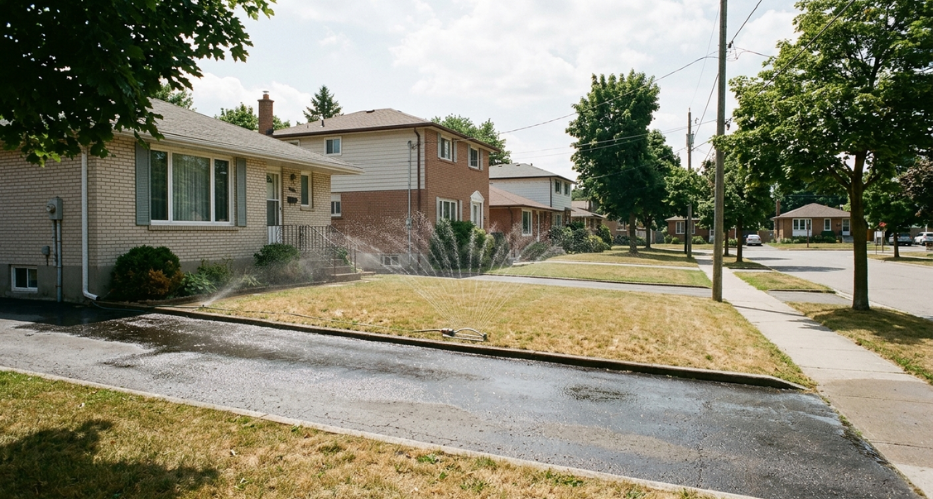
The sun is at peak intensity, temperatures are climbing past 28 degrees, and almost every drop of water you put down is evaporating before it even reaches the roots.
Your grass is still thirsty, and you have wasted both water and time.
Worse, watering at the wrong time can leave your lawn more vulnerable than before. Scorched blades, shallow root growth, and patchy brown spots are all common results.
Across Ontario, where summer heat and humidity can swing hard from week to week, getting your watering schedule right makes a real difference.
This guide breaks down when not to water, when you should, and how a consistent lawn care routine, including professional lawn maintenance, can keep your yard healthy all summer long.
Custodia offers trusted lawn maintenance services across Ontario.
Check out our home management plan in Canada for personalized services and great discounts for seniors.
Book a free consultation online or call 1-833-410-4357.
What Is the Worst Time to Water Plants in Summer in Canada?
Most lawn care pros will tell you the same thing.
If you are watering between 10 a.m. and 4 p.m. in a Canadian summer, you are essentially pouring water into thin air.
Here is why that midday window is so damaging for your lawn and garden.
- Rapid evaporation.
The sun pulls moisture off the soil surface before roots can absorb it. Your lawn stays thirsty no matter how long you water.
- Leaf scorch.
Water droplets sitting on grass blades act like tiny magnifying glasses under direct sun. This burns the surface and weakens the plant.
- Shallow root growth.
When water evaporates too fast, roots never get a deep drink. Over time they grow shallow and fragile, making your lawn less drought resistant.
Wasted water and money.
You spend time and water and see little improvement. Across a full Ontario summer, this adds up on your utility bill.
- Soil hardening.
Rapid evaporation pulls moisture from the top layer too quickly, causing soil to compact and crust. This makes it even harder for future watering to penetrate properly.
Here is how temperature affects watering effectiveness across a typical Ontario summer day.
| Time of Day | Temp Range | Evaporation Rate | Watering Effectiveness |
|---|---|---|---|
| 6 a.m. to 9 a.m. | 15 to 20C | Low | Excellent |
| 10 a.m. to 1 p.m. | 24 to 30C | Very High | Poor |
| 2 p.m. to 4 p.m. | 28 to 33C | Extreme | Very Poor |
| 6 p.m. to 8 p.m. | 22 to 26C | Moderate | Fair |
[Read: When To Stop Watering A Lawn In Canada?]
Why Is Late Night Watering Also a Problem for Lawns in Ontario?
Late night watering feels like a smart workaround.
The sun is down, temperatures are cool, and there is no evaporation to worry about.
But experienced lawn care professionals will tell you it creates a whole different set of problems.
When grass stays wet overnight, trouble follows. Here is what late night watering actually does to your lawn.
- Fungal disease. Moisture sitting on grass blades for hours creates the perfect environment for lawn fungus to develop and spread quickly.
- Mold and mildew growth. Prolonged wetness encourages mold at the soil surface, which weakens grass roots and causes patchy dieback over time.
- Pest attraction. Damp overnight conditions attract insects and lawn pests that thrive in moist, cool environments and damage grass from below.
- Poor drainage buildup. Repeated late watering saturates the soil before morning, leaving roots sitting in waterlogged conditions that restrict healthy oxygen flow.
- Weakened grass structure. Grass that stays wet too long becomes soft and vulnerable, making it far less resilient to summer heat and foot traffic.
Are There Watering Restrictions in Ontario Cities During Summer?
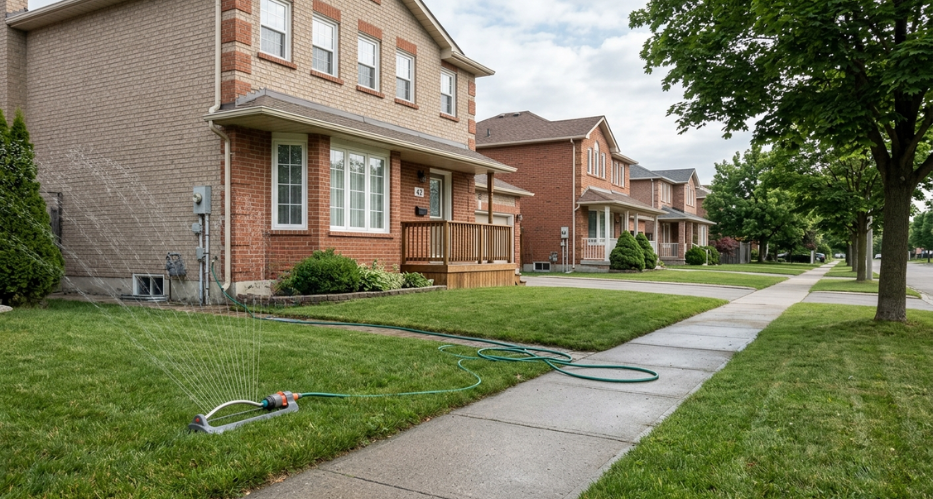
Yes, watering restrictions are very real across Ontario and ignoring them can cost you.
Many municipalities enforce seasonal bylaws that limit when and how residents can water their lawns. These rules exist to protect local water supplies during peak summer demand.
Here is a clear breakdown of typical lawn watering bylaws across major Ontario cities and what homeowners need to know.
| City | Restricted Hours | Permitted Days | Fine for Violation | Exemptions |
|---|---|---|---|---|
| Toronto | 9 a.m. to 5 p.m. | Odd or even address days | Up to $500 | Hand watering exempt |
| Peel Region | 11 a.m. to 7 p.m. | Alternate days by address | Up to $300 | New sod within 30 days |
| Guelph | 10 a.m. to 6 p.m. | Designated schedule days | Up to $400 | Drip irrigation exempt |
| Hamilton | 10 a.m. to 4 p.m. | Alternate days | Up to $250 | Gardens with permit |
| Mississauga | 11 a.m. to 7 p.m. | Alternate address days | Up to $300 | New lawn seeding exempt |
How Should You Water Your Lawn Properly in Hot Weather?
Knowing when to water is only half the equation.
How you water matters just as much, and this is where most Ontario homeowners quietly get it wrong without ever realizing it.
Lawn care professionals consistently see the same mistakes. Homeowners water too often, too lightly, and from the wrong angle.
Here are the most important watering habits that actually make a difference:
- Water deeply and less often.
Light daily watering keeps roots shallow. Watering deeply two to three times a week encourages roots to grow downward where soil stays cooler and moisture lasts longer.
- Target the roots not the blades.
Spraying water over the top of grass looks effective but most of it never reaches where it counts. Direct water low and slow toward the soil.
- Water until the soil absorbs one inch.
Use a small container to measure. One inch of water per session is the professional standard for healthy Ontario lawns in summer.
- Avoid runoff.
If water is pooling or running off your lawn, slow down the flow. Runoff means your soil is overwhelmed and roots are getting nothing useful.
- Adjust for rainfall.
If Ontario gets 25mm of rain in a week, skip your next watering session entirely. Your lawn simply does not need it.
Here is a simple comparison of the most common watering methods available to Ontario homeowners.
| Method | Best For | Water Efficiency | Cost | Pro Verdict |
|---|---|---|---|---|
| Oscillating Sprinkler | Large open lawns | Moderate | Low | Good starter option |
| Soaker Hose | Garden beds and borders | Very High | Low | Best for targeted watering |
| Rotary Sprinkler | Medium sized lawns | Moderate | Low to Medium | Reliable and easy to use |
| Drip Irrigation | Gardens and landscaping | Excellent | Medium to High | Most efficient overall |
| Hand Watering | Small patches and new seed | Low | Minimal | Good for spot treatment |
When Should You Call a Lawn Maintenance Service Instead of DIY Watering?
There comes a point where no amount of early morning watering or careful scheduling fixes a lawn that has already fallen behind.
Most homeowners reach this point mid-summer, when patches keep spreading and the grass just stops responding the way it should.
Experienced lawn care professionals see this every season across Ontario.
The honest truth is that watering alone cannot compensate for inconsistent mowing, compacted soil, or a lawn that has not been properly maintained through the season.
Here are 10 clear signs that your current lawn care routine is no longer working:
1. Persistent brown patches.
If the same spots stay brown week after week despite regular watering, the problem runs deeper than moisture. Compaction or disease is likely at play.
2. Thinning grass.
Grass that keeps thinning out despite your best efforts usually signals poor root health, which proper mowing and aeration can help correct significantly.
3. Uneven growth.
Some areas grow fast while others barely grow at all. This points to inconsistent soil conditions that a professional eye can quickly identify and address.
4. Lawn feels spongy or waterlogged.
This means drainage is poor and watering habits need a full reset alongside proper lawn care intervention.
5. You simply do not have the time.
Life gets busy. Missing mowing sessions and watering schedules across an Ontario summer adds up fast and the lawn shows it clearly.
6. Grass stays yellow despite watering.
Yellowing that does not improve with water often points to nutrient deficiency or soil imbalance that watering alone will never fix.
7. Weeds are taking over.
When weeds outpace your grass, it usually means your lawn is too stressed and thin to compete. Professional care helps restore the balance effectively.
8. Edges and borders look neglected.
Overgrown edges along driveways and garden beds are a reliable sign that your overall lawn routine needs professional support and structure.
9. Lawn is not recovering after heat waves.
Healthy grass bounces back within days after extreme heat. If yours stays flat and dull, root health is likely already compromised.
10. Neighbors lawns look noticeably better.
Sometimes the clearest sign is right next door. If surrounding lawns are thriving and yours is struggling, a professional assessment is well overdue.
How does consistent professional mowing directly support better moisture retention and overall lawn health?
| Mowing Benefit | What It Does | Impact on Watering |
|---|---|---|
| Correct cutting height | Keeps grass at 7 to 9cm | Shades soil and reduces evaporation naturally |
| Regular scheduling | Prevents overgrowth stress | Helps roots absorb water more efficiently |
| Clean blade cuts | Reduces disease entry points | Keeps grass healthier between watering sessions |
| Clipping management | Returns nutrients to soil | Improves moisture retention at root level |
| Consistent coverage | Eliminates uneven growth | Ensures water reaches all areas evenly |
Smart Watering and Consistent Lawn Care Equals Healthier Grass in Ontario
The worst time to water plants in summer in Canada is midday.
Avoid it.
Water early, mow consistently, and let Custodia handle the hard work.
A healthier Ontario lawn starts with one good decision today.
Lawn Watering FAQs for Ontario Homeowners
1. What month should I stop watering my plants in Ontario?
In Ontario, most homeowners can stop regular watering by late September or October, depending on rainfall and temperature. As the growing season ends, natural moisture is usually enough to support your lawn.
2. When should you stop watering your lawn in Canada?
You should reduce watering in early fall and stop completely once the ground begins to cool and rainfall increases. In most parts of Canada, this happens between late September and mid-October.
3. Should you water your grass in October in Ontario?
Light watering may still be needed in early October if conditions are dry.
However, frequent watering is usually unnecessary as cooler temperatures reduce evaporation.
4. How do I maintain my lawn if I don’t have time to water and mow regularly?
If your schedule makes lawn care difficult, combining a simple watering routine with a professional lawn maintenance service can help keep your grass healthy without constant effort.
5. Is hiring a lawn maintenance service in Ontario worth it?
For many homeowners, yes.
A professional service ensures consistent mowing, better lawn appearance, and less stress during the busy summer months; especially when paired with proper watering practices.