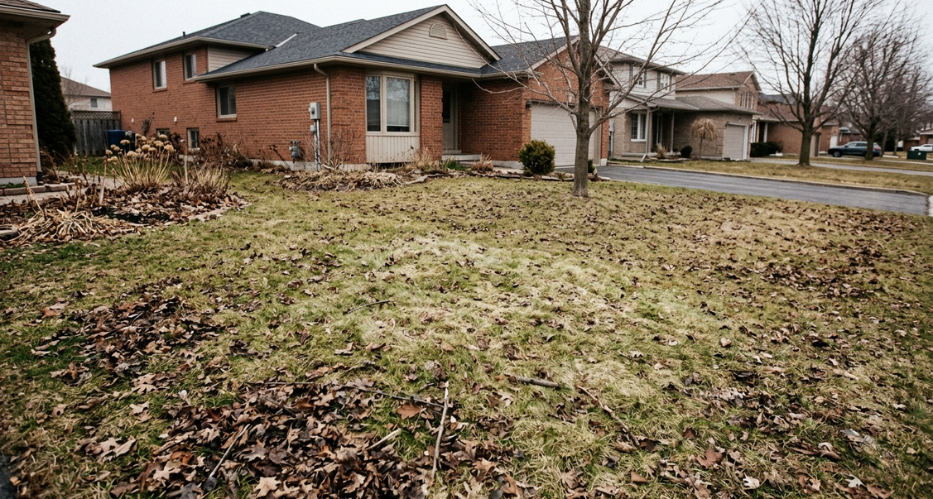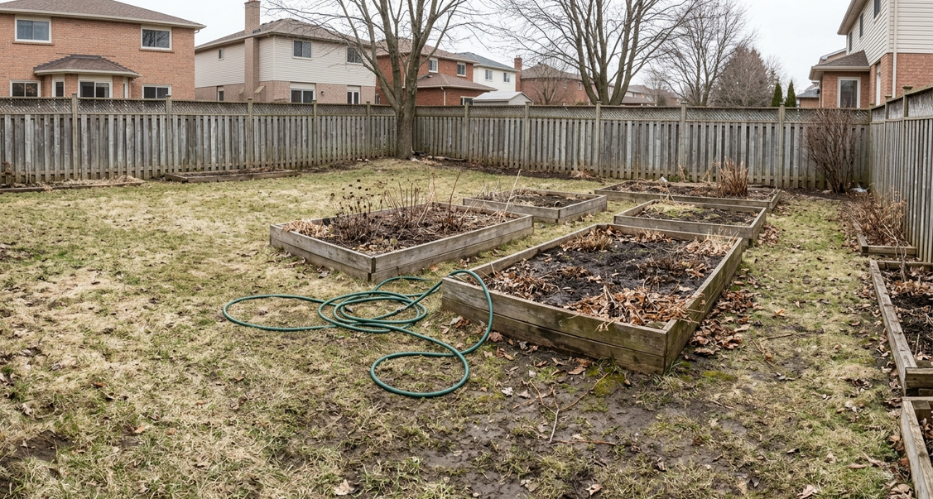

Have you ever opened your garden in spring and felt confused about what went wrong over winter?
Plants that looked strong in fall suddenly appear dead. Soil feels lifeless. And beds you worked hard on seem to have failed without warning.
This is a common experience for homeowners, even for those who followed basic gardening advice.
Canadian winters are not just cold. They are unpredictable.
Temperatures swing fast. Winds dry out plants. Snow cover comes and goes. And when gardens are not prepared for these extremes, damage builds quietly beneath the surface.
Roots lose access to water. Plant cells rupture from frost. And natural dormancy gets disrupted before spring even arrives.
What many homeowners do not realize is that most winter garden failure is preventable. It often comes down to timing, plant choice, soil protection, and understanding how Canadian winter conditions actually work.
Small oversights in fall can lead to major losses months later.
In this Ontario homeowner winter gardening guide, you will learn why gardens fail in Canada during winter, what really happens beneath the soil, and how to protect your garden before the cold sets in.
What Happens To Gardens In The Winter?
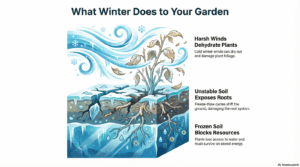
During winter, soil freezes, roots lose access to water, and plants rely on stored energy to survive. Freeze-thaw cycles shift soil and expose roots while wind dries out foliage.
And without protection, even healthy gardens slowly weaken beneath the surface.
The Top 10 Winter Garden Mistakes Homeowners Make in Ontario
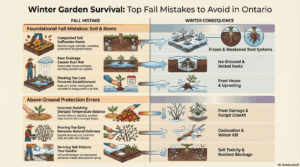
Many winter garden failures in Ontario do not begin with snow or cold snaps.
They begin earlier, often in fall, when gardens still look stable and daily life becomes busy. These mistakes slowly weaken plants, soil, and root systems, making winter damage almost unavoidable.
Here are the most damaging mistakes homeowners make:
Leaving garden beds compacted after fall
Compacted soil restricts oxygen and water movement around roots. When winter moisture freezes in dense soil, roots suffocate and weaken.
Over time, this reduces microbial activity and damages soil structure, making spring recovery slow and uneven.
Ignoring drainage around garden beds
Poor drainage allows rain and snowmelt to pool near plant roots. As this water freezes and thaws, it causes root rot, soil erosion, and structural breakdown that plants cannot repair during dormancy.
Failing to protect young or newly planted perennials
New plants lack deep root systems and stored energy. Without added insulation, they cannot regulate temperature changes and often die during prolonged cold or sudden freezes.
Over-pruning before plants reach full dormancy
Early or aggressive pruning removes natural protection. Exposed stems lose moisture faster and suffer from frost cracks and wind damage during fluctuating winter temperatures.
1. This is where small mistakes start adding up
At this point, many homeowners believe the hardest part is done. In reality, this is when winter stress compounds.
Soil conditions worsen, exposure increases, and recovery becomes far more difficult once spring arrives.
2. Using the wrong mulch type or depth
Thin mulch provides little insulation, while excessive mulch traps moisture. Both scenarios disrupt root temperature balance and increase fungal growth under snow cover.
3. Allowing salt and de-icing chemicals to reach soil
Salt alters soil chemistry and damages root membranes. Even small amounts accumulate over winter, reducing nutrient absorption and causing delayed spring dieback
4. Planting too late in the season
Late-season planting does not allow roots to establish. When cold arrives, plants lack anchorage and are easily damaged by frost heaving.
5. Overwatering before the ground freezes
Excess water expands as ice around roots. This causes cellular rupture and oxygen deprivation that plants cannot recover from until spring.
6. Ignoring wind exposure in open areas
Winter winds remove moisture from plant tissues. With frozen soil blocking water uptake, plants dry out slowly, leading to winter burn and stem death.
7. Relying on snow as the only protection
Snow cover is inconsistent in Ontario. Warm spells melt it away, leaving plants exposed to extreme cold without insulation when they need it most.
[Read: What Do Professionals Use On Lawns In Canada During Winter?]
How Can You Protect Your Garden Before Winter Starts in Ontario?
Preparing your garden for winter is about timing, protection, and reducing stress before cold sets in.
When done right, plants enter winter stronger and recover faster in spring.
And this preparation also protects the time and care you invest in your outdoor spaces.
How do I prepare my garden for winter in Ontario, Canada?
Here are 5 easy and practical steps to keep plants from dying in the cold:
- Add proper mulch to insulate roots and regulate soil temperature.
- Improve drainage to prevent water from freezing around roots.
- Protect young and sensitive plants with covers or wind barriers.
- Avoid late pruning so plants can enter full dormancy naturally.
- Inspect soil, beds, and exposure before the first hard frost.
For many homeowners, managing this alone is stressful.
If you want expert help, book a consultation online or call 1-833-410-4357 to schedule a professional inspection.
You can also explore our Home Management Plans for lawn, yard, and garden care before, during, and after winter, all managed for you on schedule.
Why Are Plants Killed In Winter By Frost?

Frost kills plants because water inside their cells freezes, expands, and breaks cell walls. This physical damage disrupts how plants move water and nutrients, leading to dehydration, tissue collapse, and eventual death.
Tender plants suffer the most, especially vegetables and flowers that are not adapted to cold.
Some plants produce natural antifreeze compounds that slow ice formation.
However, sudden cold snaps, long freezing periods, or rapid morning thawing can overwhelm these defenses. This is why plants may look fine overnight but collapse the next day.
How Frost Damages Plant Cells
- Cell Expansion & Rupture
Ice crystals expand inside plant cells and tear cell walls, damaging the plant’s structure.
- Dehydration (Desiccation)
Frozen water outside cells pulls moisture out, shrinking and drying plant tissues.
- Metabolic Disruption
Freezing stops nutrient and water movement, shutting down essential plant functions.
- Rapid Thawing
Sudden sunlight causes further cell stress and worsens existing damage.
What Are Signs of Frost Damage?
Leaves turn black or dark green, stems soften, flowers collapse, and plants appear wilted or limp.
What Temperature Is Considered A Killing Frost?
A killing frost usually occurs when temperatures drop to 28°F (-2°C) or lower for several hours. This level of cold ends the growing season by destroying most garden plants, especially tender ones.
Frost vs. Freeze
- Frost forms between 36°F and 29°F when moisture freezes on surfaces.
- Freeze occurs when air temperatures reach 32°F or below.
- Killing Frost or Freeze happens at 28°F or lower for extended periods.
Temperature & Impact
- Light Freeze (29–32°F): Damages very tender plants.
- Moderate Freeze (25–28°F): Harms most flowers and vegetables.
- Hard Freeze (below 25°F): Destroys nearly all vegetation.
Damage also depends on exposure time, plant hardiness, and moisture levels.
Is It Okay To Plant Plants In October In Ontario?
Yes, October planting is possible in Ontario, but only for cold-tolerant plants and in frost-aware locations.
Early October works best, before hard frosts arrive.
Cool-weather crops like kale, cabbage, lettuce, carrots, beets, onions, garlic, and Brussels sprouts handle cooler soil and shorter days well. These plants grow slowly but establish roots before winter.
However, tender plants should not be planted in October.
Timing, soil temperature, and frost protection all matter. When planting late in the season, proper mulching and site selection are essential for survival.
Conclusion
Most gardens in Ontario do not fail because homeowners do not care.
They fail because winter arrives faster than expected and small details are easy to miss. Soil shifts. Roots dry out. And damage builds quietly while everything looks fine on the surface.
Yet with the right preparation, most of this loss can be avoided.
If you want guidance that removes guesswork, book a free consultation online or call 1-833-410-4357 to schedule a professional inspection.