
The snow melts, the ground looks clear, and it feels like winter is finally over. But under that surface, your yard is still waking up. Wet soil, hidden debris, dead grass, and damaged plants all tell a different story.
Many homeowners rush outside too soon or wait too long. Both mistakes can hurt lawns, gardens, and trees.
Cleaning up too early can compact soil and damage roots. Waiting too long allows mold, pests, and weeds to take over fast.
In Ontario, timing is everything because spring weather changes quickly and frost can return without warning.

A proper spring yard cleanup is not just about looks.
It protects plant health, improves drainage, and prevents long-term damage that costs money later. Leftover leaves can smother grass. Broken branches can become safety hazards. Clogged garden beds can stop new growth before it starts.
For busy homeowners, keeping up with the right timing is hard. Work, family, and unpredictable weather get in the way. That is why planning matters.
With Custodia’s Home Management Plan, spring yard cleanup is handled at the right time, the right way.
From debris removal to seasonal prep, your yard gets professional care without the stress, so your home is ready for spring from the ground up.
Why Timing Matters for Spring Yard Cleanup in Canada
In Canada, spring yard cleanup is not about the calendar. It is about conditions. Soil moisture, overnight frost, and plant recovery all decide when it is safe to start.
Acting too soon or too late can undo months of lawn and garden care.
Knowing what to clean and when helps protect roots, prevent damage, and set your yard up for healthy growth.
Best Time to Start Spring Yard Cleanup in Canada
| Yard Task | Too Early Risk | Ideal Time Window (Ontario) | Why Timing Matters |
|---|---|---|---|
| Leaf and debris removal | Soil compaction | Late March to mid April | Ground needs to dry to avoid root damage |
| Lawn raking | Tearing grass | Early to mid April | Grass must be out of dormancy |
| Garden bed cleanup | Killing new shoots | Mid April | Perennials start showing growth |
| Tree and shrub pruning | Stress and disease | March to early April | Before buds fully open |
| Lawn dethatching | Exposed roots | Late April to May | Grass needs active growth |
| Fertilizing lawn | Nutrient loss | Late April to early May | Soil temperature must rise |
| Mulching beds | Trapped moisture | Late April to May | Prevents mold and rot |
| Power washing patios | Surface damage | April onward | Freeze risk must pass |
| Seeding bare spots | Poor germination | Late April to May | Soil warmth is key |
| Full yard cleanup | Long-term damage | Staged through spring | Prevents shock to plants |
Following the approach in this table keeps your yard healthy, safe, and ready for the growing season.
Top 15 Signs Your Yard Is Ready for Spring Cleanup in Canada
In Canada, spring yard cleanup is not about dates on a calendar.
It is about soil science, plant biology, and how winter stress shows up weeks later.
Research shows that working the soil too early causes long-term compaction, which reduces root growth and water absorption for the entire season.
Many municipalities also warn homeowners after winter storms to wait until ground conditions stabilize to avoid turf damage and drainage issues.

Your yard gives clear signals when it is truly ready.
These signs are subtle, often missed, and tied to what is happening below the surface, not just what you see on top.
1. Soil rebounds when pressed, not smeared
Press your boot heel into the soil. If it springs back instead of smearing, oxygen levels are safe for roots to recover. Compacted soil at this stage can stunt grass growth all season.
2. Snow-free zones stay dry for several days
Persistent dryness means frost is leaving the topsoil, not just melting temporarily. The Toronto and Ottawa conservation authorities often monitor soil saturation after spring thaws to advise on safe cleanup timing.
3. Grass crowns feel firm at the base
Soft crowns signal rot risk caused by snow mold, a common winter pathogen in Ontario lawns. Early intervention prevents patches from spreading.
4. Leaf litter breaks down unevenly
Patchy decay shows microbial activity has restarted, a biological green light that the soil ecosystem is active enough to handle foot traffic and cleanup tools.
5. Delayed bud swelling on shrubs
Slower bud development can indicate winter dieback. Pruning now supports healthier spring growth and prevents disease from taking hold.
6. Standing water near foundations
This can reveal blocked drainage channels or compacted soil. Local municipal flood reports often highlight these zones as high-risk for spring water damage.
7. Early weeds near driveways and paths
Heat-reflective surfaces encourage germination. Their emergence signals nearby soil is workable and that cleanup should include targeted weed management.
And That’s Not All; Other Signs to Watch For Include:

8. Earthworm activity appears
Earthworms are biological indicators used in soil health studies. Their presence confirms the soil is aerated and safe to work with.
9. Branches crack easily with light pressure
Dead or brittle twigs from winter storms show pruning candidates. Removing these early prevents pest infestations later.
10. Moss patches are thinning
Thinning moss suggests improved sunlight penetration and drainage—ideal conditions to start dethatching and aeration.
11. Exposed root tips on perennials
Roots pushed up by frost heave may need mulching or repositioning. Early attention prevents damage during growth spurts.
12. Mulch displacement or decomposition
Mulch washed away by winter runoff shows spots needing replenishment, which is easier before spring rains.
13. Signs of rodent or animal activity
Burrows or chewed bark reveal areas to protect before new plantings start. Preventive cleanup reduces infestations.
14. Bare soil or patches showing winter stress
Exposed areas signal where reseeding or soil amendment is necessary, ensuring uniform lawn recovery.
15. Standing debris from snow and ice
Broken fencing, stray boards, or garden stakes must be cleared early to prevent accidents and damage when mowing begins.
[Read: What Is A Good Lawn Care Schedule In Ontario?]
Get a Professional Yard Inspection Today
Call 1-833-410-4357 or book online now to schedule your professional yard inspection in Ontario.
Discover our Home Management Plans for personalized, seasonal services that keep your lawn, garden, and property in perfect condition all year long.
Critical Indicators And Step-by-Step Guide for Spring Yard Cleanup in Canada
Before diving into spring cleanup, watch for key indicators that signal your yard is ready. Paying attention to these helps protect soil, plants, and pollinators while ensuring cleanup is effective.
Key Indicators:
1. Temperature:
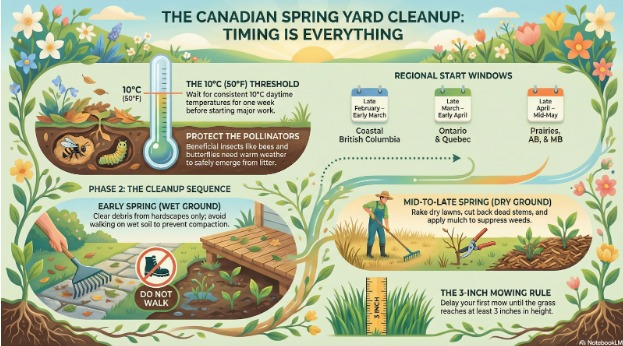
Nighttime temps consistently above 0°C for two weeks; daytime highs near 10°C (50°F) to protect bees and butterflies.
2. Soil Moisture:
Avoid walking on spongy or wet soil to prevent compaction and uneven ground.
3. Plant Growth:
Buds swelling on shrubs indicate it’s time to prune dead or damaged branches.
Step-By-Step Spring Yard Cleanup Tasks For Canadian Homeowners

Follow these step-by-step tasks to ensure your yard is healthy and ready for the season:
1. Clear Debris:
Remove branches, sticks, and leftover winter litter.
2. Rake Gently:
Loosen matted grass to prevent snow mold and improve airflow.
3. Dethatch & Aerate:
Mid-to-late April, once soil is no longer saturated.
4. Prune & Divide:
Dead or damaged branches first; flowering shrubs after bloom.
5. Fertilize & Seed:
Apply slow-release fertilizer and seed once the soil warms.
Spring Yard Cleanup FAQs Ontario Homeowners Ask
1. When is the best time to schedule spring yard cleanup in Ontario?
The ideal time is once snow has fully melted, and the soil is dry enough to avoid compaction—usually mid-April to early May, depending on local weather.
2. What services are included ina professional spring yard cleanup?
Typical services include debris removal, pruning, lawn aeration, dethatching, fertilizing, mulching, and seasonal plant care to prepare your yard for healthy growth.
3. Can spring yard cleanup prevent pest and mold issues?
Yes. Clearing debris and leaves, inspecting plants, and improving drainage reduce mold, mildew, and insect infestations before they become a problem.
4. How often should I hire professional yard cleanup services?
Most homeowners benefit from a thorough spring cleanup once a year, combined with seasonal maintenance checks to keep soil, plants, and lawns healthy year-round.
5. Is professional spring yard cleanup worth the cost?
Absolutely. It saves time, prevents property damage, ensures plant health, and maximizes curb appeal, while reducing costly repairs or replanting later.
Get a Professional Yard Inspection Today
Ensure your yard is ready for spring with Custodia’s expert team. Book your inspection online or call us at 1-833-410-4357.
Check out our Home Management Plan, including seasonal and custom services tailored to keep your entire property in top shape year-round.