
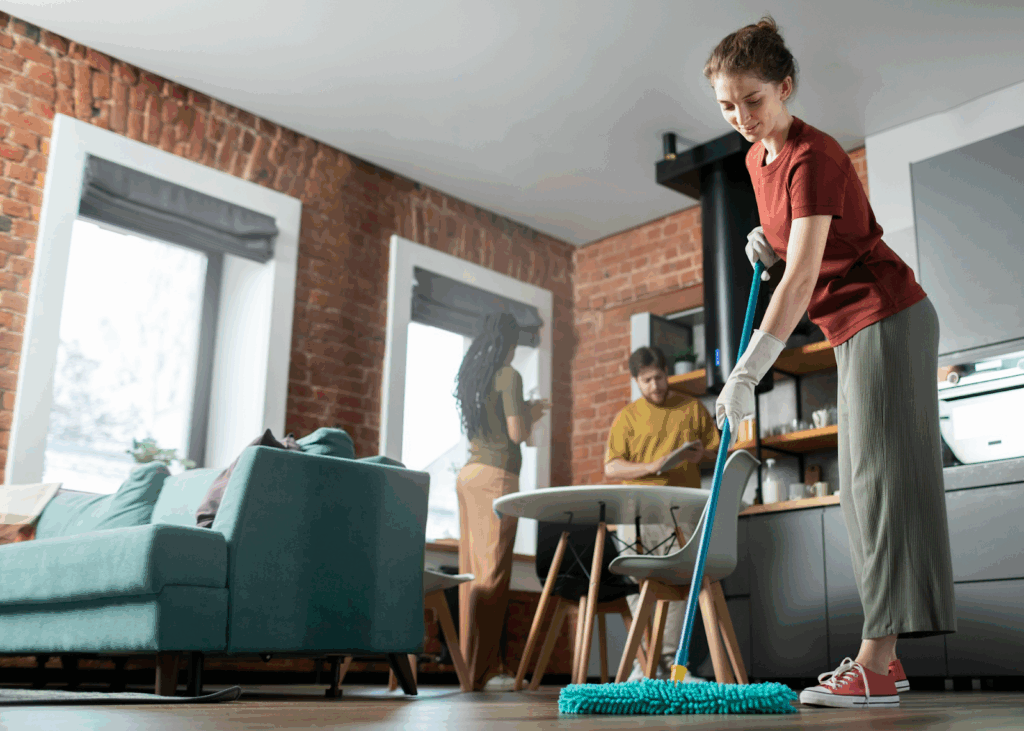
Here’s how the 20-minute rule works: you dedicate yourself to cleaning for just 20 minutes straight, and then you’re done. There are no exhausting cleaning marathons, you don’t beat yourself up over what didn’t get done, and no more excuses about lacking time.
It doesn’t matter if you’re dealing with a messy kitchen after dinner or giving your bedroom a quick touch-up before company arrives—this approach turns cleaning into manageable pieces that slide right into your daily life. For busy Canadians working to maintain their homes during long winters and tight schedules, this rule is a practical answer that generates results.
The Psychology Behind The 20-minute Rule
The brilliance of the 20-minute rule comes down to how it partners with your brain instead of fighting against it. When you think about cleaning your entire house, your mind instantly starts adding up the hours of work stretching ahead, and suddenly that couch starts looking awfully appealing. But something interesting happens when you tell yourself you only need to clean for 20 minutes. That window of time feels doable, almost simple, and you’re much more likely to actually get started.
There’s also real science backing this strategy. Studies show that you can maintain your focus and energy for roughly 20 to 25 minutes before your mind starts wandering elsewhere. The 20-minute cleaning rule works with this natural pattern, letting you operate at your best without wearing yourself down. You’ll notice you move more quickly, decide faster about what needs attention next, and stay motivated because you can see the finish line approaching.
How To Implement The 20-minute Rule Effectively
Getting started with the 20-minute cleaning rule requires nothing more than a timer and a game plan. Set your phone timer for exactly 20 minutes. Before you hit start on that timer, take a brief moment to choose which space you’ll focus on. Having a specific target helps you make the most of those 20 minutes instead of drifting from room to room without making genuine progress.
Staying focused during those 20 minutes is what makes this work. Picture it as a cleaning sprint—you’re moving with intention, making quick decisions, and keeping your momentum strong. Many people discover that playing upbeat music during their 20-minute sessions really helps. It makes the time fly by and brings an element of enjoyment to the work.
Some Canadians even turn it into a family event, with everyone handling different spaces for 20 minutes as a team.
Adapting The 20-minute Rule For Canadian Homes And Lifestyles
Canadian homes face distinctive cleaning challenges that make the 20-minute rule especially useful. Winters bring salt stains, melting snow tracked through doorways, and mud rooms needing constant care. Instead of watching these messes pile up until they feel impossible to handle, a quick 20-minute session focused on your entryway keeps everything manageable.
The 20-minute cleaning method also shines during seasonal transitions, which Canadians understand can be quite dramatic. When spring finally arrives, and you’re ready to store away winter clothes and gear, landing it in 20 minute chunks makes the job feel much less intimidating.
For families, the 20-minute rule can really change the game when it comes to teaching kids about taking on responsibilities and working together. Children connect well with time-based challenges, and 20 minutes feels achievable even for the little ones.
You could have everyone tackle their own rooms for 20 minutes on Saturday morning, or split up shared spaces, with each family member claiming a zone. This develops solid habits without the arguments that typically come up when asking kids to clean.
What makes the 20-minute rule so appealing is how simple and adaptable it is. You’re not locking yourself into hours of cleaning or trying to maintain an unrealistically perfect home. You’re just setting aside small, focused chunks of time to keep your space comfortable and working well.