You might not know it, but you could be confusing the one-third rule for lawn maintenance with the “1% rule.”
You are not alone. A lot of Ontario homeowners mix these two up all the time.
Here is the difference.
The 1% rule is actually about fertilizing.
It simply means never apply more than 1 pound of nitrogen per 1,000 square feet of lawn in a single application. It protects your grass from burning and keeps harmful chemicals out of Ontario’s waterways.
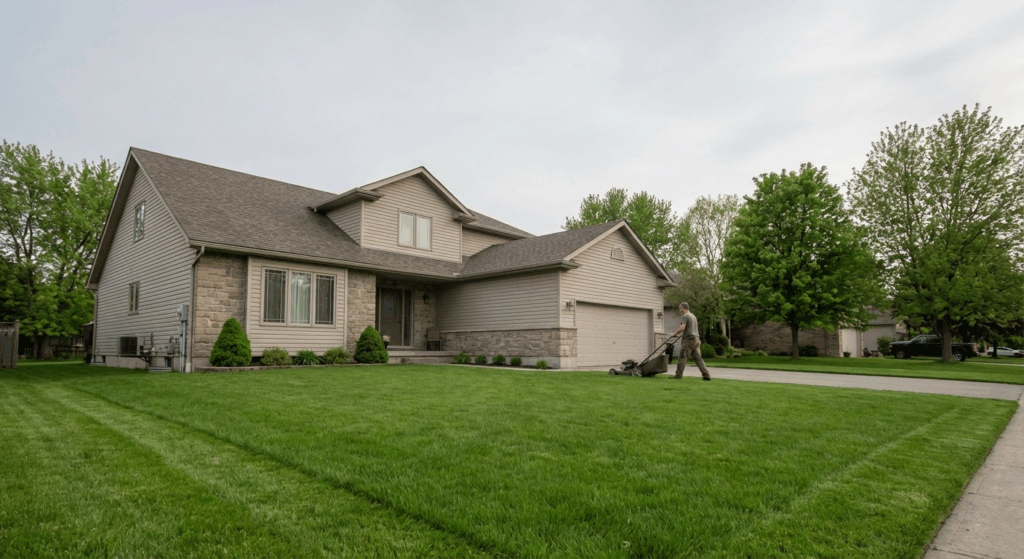
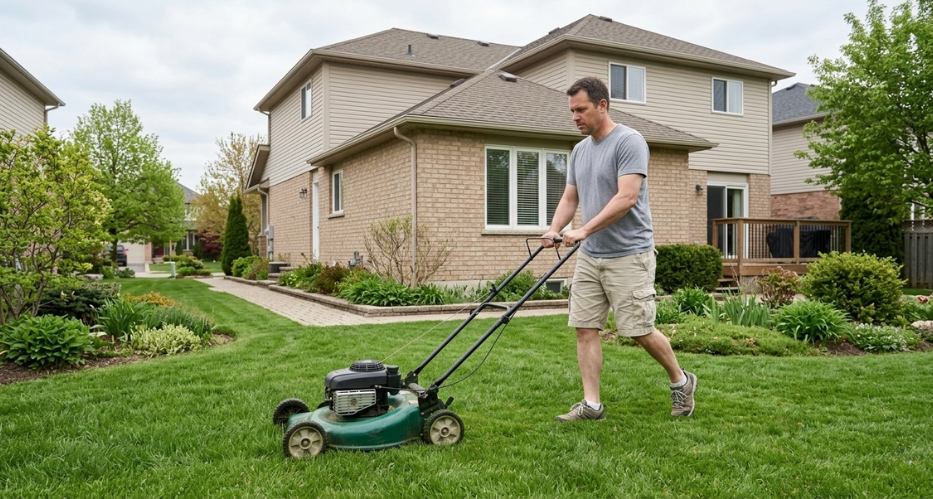
The one-third rule is about mowing.
Never cut more than one-third of your grass blade height in a single session.
Two completely different things. Both equally important.
People confuse them because both are simple numerical guidelines built around protecting your lawn. They sound similar but they do different jobs.
Now that we have cleared that up, let us focus on the one-third mowing rule.
Because this is the one that most Ontario homeowners get wrong every single weekend without even realizing it.
Scalping your lawn. Mowing too short. Cutting too much at once.
Sound familiar?
Our professional garden care service and team in Ontario is here to help.
Check out our Home Management Plan for personalized services and amazing discounts for seniors in Ontario.
Book your free consultation online or call 1-833-410-4357.
What Is the One-Third Rule for Lawn Maintenance in Ontario, Canada?
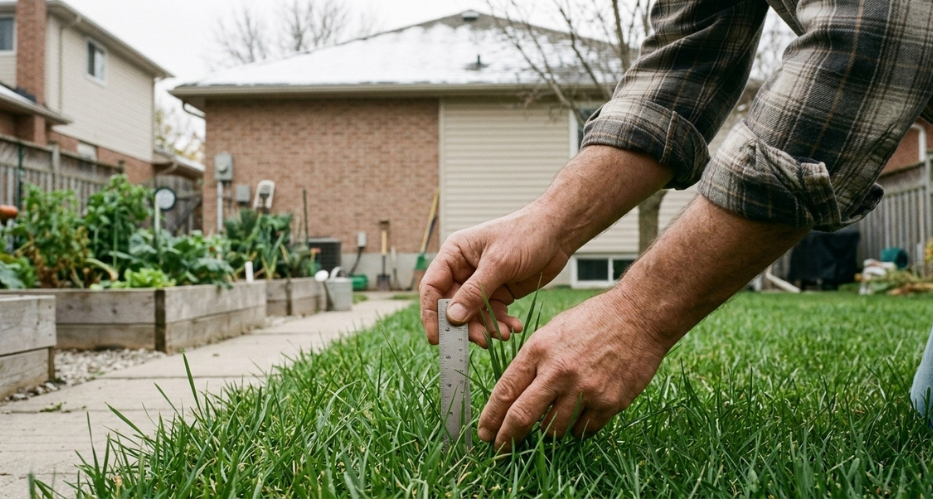
The one-third lawn maintenance rule is straightforward. Only cut one-third of your grass blade height at a time. Never more.
Think of it this way.
If your target lawn height is 3 inches, you mow when the grass hits 4.5 inches. Your lawn stays healthy, strong, and stress-free all season long.
How Does the One-Third Lawn Care Rule Work for Ontario Grass Types?
Ontario lawns are mostly cool-season grasses. Each type responds differently to mowing.
Here is a quick breakdown of common grass types across Ontario:
| Grass Type | Ideal Height | Mow When It Reaches | Best Use |
|---|---|---|---|
| Kentucky Bluegrass | 2.5 to 3 inches | 4 to 4.5 inches | Front lawns, parks |
| Tall Fescue | 3 to 4 inches | 4.5 to 6 inches | High traffic areas |
| Perennial Ryegrass | 2 to 3 inches | 3 to 4.5 inches | Overseeding, repair |
| Fine Fescue | 2.5 to 3 inches | 4 to 4.5 inches | Shaded areas |
| Creeping Red Fescue | 2.5 to 3.5 inches | 4 to 5 inches | Low maintenance lawns |
| Canada Bluegrass | 2 to 3 inches | 3 to 4.5 inches | Dry and poor soils |
| Sheep Fescue | 3 to 4 inches | 4.5 to 6 inches | Slopes and erosion control |
| Smooth Brome | 3 to 4 inches | 4.5 to 6 inches | Rural and large properties |
| Timothy Grass | 2.5 to 3.5 inches | 4 to 5 inches | Mixed lawns and meadows |
| Chewings Fescue | 2 to 3 inches | 3 to 4.5 inches | Dense shaded lawns |
Why Do Ontario Lawn Care Experts Recommend the One-Third Mowing Rule Over Other Techniques?
Ontario lawn care professionals trust this rule because it consistently delivers real results.
Here is why it works better than guessing:
- Protects grass roots from heat stress during Ontario’s hot and dry summer months every year.
- Reduces weed growth by keeping your lawn thick and dense enough to crowd weeds out naturally.
- Prevents lawn scalping which is one of the most common and damaging mistakes Ontario homeowners make.
- Supports faster recovery after mowing so your grass stays green and bounces back quickly.
What Is the Best Grass Cutting Height for Ontario Lawns Using the One-Third Rule?
Getting your mower blade height right is half the battle. Cut too low and you stress your grass. Cut too high and you invite disease.
The one-third rule keeps you right in the sweet spot.
How High Should I Set My Mower Blade for the One-Third Rule in Ontario’s Climate?
Most Ontario lawns thrive between 2.5 and 3.5 inches.
Here is a simple guide:
- Set your blade higher in summer to shade roots and retain soil moisture during dry Ontario heat.
- Lower slightly in spring and fall when temperatures are cooler and grass grows more actively.
- Never go below 2 inches as this weakens roots and exposes soil to weeds and erosion.
Does the Ideal Lawn Height Change Between Spring, Summer, and Fall in Ontario?
Absolutely. Ontario seasons affect your grass more than most homeowners realize.
Here is a seasonal breakdown:
| Season | Month Range | Recommended Height | Mow When It Reaches | Key Reason |
|---|---|---|---|---|
| Early Spring | March to April | 2 to 2.5 inches | 3 to 3.5 inches | Removes winter damage and encourages new growth |
| Late Spring | May to June | 2.5 to 3 inches | 4 to 4.5 inches | Supports active growing season |
| Summer | July to August | 3 to 3.5 inches | 4.5 to 5 inches | Protects roots from heat and drought stress |
| Early Fall | September to October | 2.5 to 3 inches | 4 to 4.5 inches | Prepares lawn for cooler temperatures |
| Late Fall | November | 2 to 2.5 inches | 3 to 3.5 inches | Prevents snow mold and winter disease |
Adjusting your mowing height with Ontario’s seasons is one of the smartest and easiest things you can do for a healthier lawn year round.
How Often Should You Mow Your Ontario Lawn When Following the One-Third Lawn Maintenance Rule?
Here is the truth. There is no single mowing schedule that works for every Ontario lawn all year long.
Your mowing frequency should follow your grass growth. Not the calendar.
| Season | Mowing Frequency | Growth Rate | Key Tip |
|---|---|---|---|
| Early Spring | Every 5 to 7 days | Fast and active | Grass wakes up hungry and grows quickly |
| Late Spring | Every 5 to 7 days | Very fast | Peak growing season across most of Ontario |
| Summer | Every 10 to 14 days | Slow and stressed | Heat slows growth so mow less frequently |
| Early Fall | Every 7 to 10 days | Moderate | Cooler temps trigger another growth surge |
| Late Fall | Every 2 to 3 weeks | Very slow | Grass is winding down before winter dormancy |
What Are the Benefits of the One-Third Rule for Lawn Care in Ontario, Canada?
The one-third lawn maintenance rule does more than just keep your grass looking neat. It actively works to make your entire lawn healthier, stronger, and more resilient through every Ontario season.
Can Following the One-Third Lawn Rule Save Ontario Homeowners Money on Lawn Maintenance Costs?
Yes. Absolutely.
Here are five real ways this simple rule puts money back in your pocket:
- Reduces fertilizer costs because healthier grass grown at the right height naturally needs fewer chemical inputs to stay green.
- Lowers water bills since properly mowed lawns develop deeper roots that retain soil moisture far more efficiently during dry Ontario summers.
- Prevents costly lawn repairs by avoiding scalping and root damage that often requires expensive reseeding or sodding to fix properly.
- Extends mower blade life because cutting at the right height reduces strain on your equipment and keeps blades sharper longer.
- Cuts professional service costs since a well maintained lawn following the one-third rule needs less corrective treatment and fewer emergency lawn care visits.
How Does Grass cycling Work With the One-Third Lawn Maintenance Rule in Ontario?
Grass cycling is one of the most underrated lawn care habits across Ontario. It simply means leaving your grass clippings on the lawn after mowing instead of bagging them up.
When you follow the one-third rule consistently, your clippings are short enough to break down quickly.
They do not clump. They do not smother your grass.
They just quietly decompose and feed your lawn naturally.
Should Ontario Homeowners Leave Grass Clippings on the Lawn After Mowing?
Yes and here is why it makes total sense for Ontario lawns:
- Clippings decompose fast when they are short enough following the one-third rule and return valuable organic matter back to your soil.
- Moisture is retained longer because a light layer of clippings acts as a natural mulch protecting soil from Ontario’s summer heat.
- Soil health improves gradually as decomposing clippings feed beneficial microorganisms that keep your lawn ecosystem balanced and thriving naturally.
How Much Fertilizer Can Grass cycling Replace for Ontario Lawns?
More than most homeowners think.
Here is a helpful breakdown:
| Nutrient | What Clippings Provide | Equivalent Fertilizer Saving |
|---|---|---|
| Nitrogen | Up to 25% of annual lawn needs | 1 to 2 fertilizer applications per year |
| Phosphorus | Moderate amounts returned to soil | Reduces phosphorus supplement needs noticeably |
| Potassium | Small but consistent supply | Supports overall grass strength and disease resistance |
FAQs About the One-Third Lawn Maintenance Rule in Ontario
Q1: Is the one-third mowing rule suitable for newly seeded Ontario lawns?
Wait until new grass reaches at least 3.5 inches before applying the one-third rule for best results.
Q2: Can I apply the one-third lawn maintenance rule using a riding mower in Ontario?
Yes. Set your riding mower blade to the correct seasonal height and mow only when needed.
Q3: Does the one-third rule still apply during an Ontario drought or water restriction period?
Yes. Raise your mowing height slightly and mow less frequently to protect stressed grass during drought.
Conclusion
The one-third lawn maintenance rule is simple, proven, and perfectly suited for Ontario’s climate. Follow it consistently and your lawn will stay healthier year round.
Need expert help?
Our Ontario garden care team is ready.
Book your free consultation online today or call us at 1-833-410-4357.