Growing up the youngest daughter of a newspaper giant 50+ years my senior
By Mattea Pyette
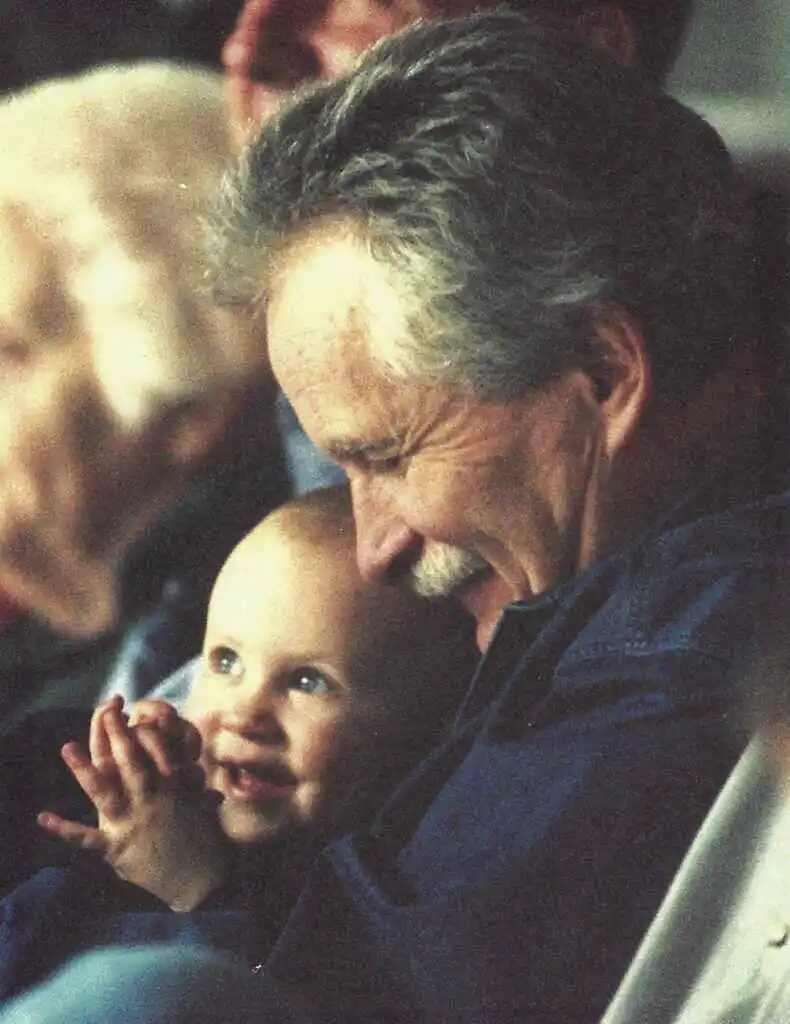
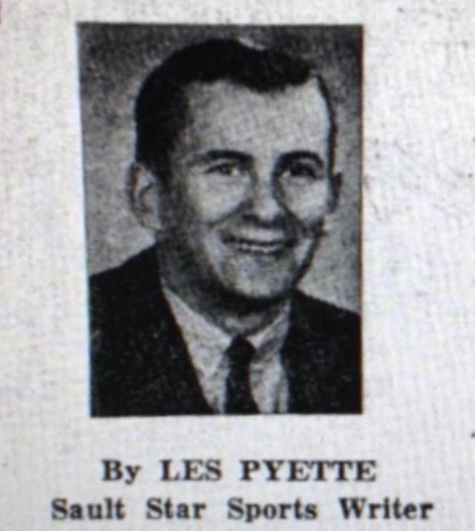
In 1963, at just 17 years old, my dad began working as a sportswriter in his hometown, Sault Ste. Marie. The 41-year journalism career that followed has always seemed a whirlwind to me. The youngest of his eight children, I grew up with the luxury of a retired father who was happy to spend his time sitting by the window on a rainy day when he’d let me play hooky, regaling me with tales about his colleagues I’d never met, news events I’d never heard of, and countless other life lessons I didn’t need yet. He always made sure I followed, and I took everything he said as the full truth. Thanks to him, I always knew a bit too much for my age and wasn’t afraid to let people know. I can remember telling a friend’s mom when I was about 7 years old, “Don’t you know you can’t sell your house until you’ve already bought a new one?” because that’s how my dad said that was done. When I was five or six years old, my dad made me up business cards that stated my position as his personal assistant, with his phone number listed. I was very proud. I handed them out to all my friends, drew on the backs of them, and used them to make up my own card games. My duties as personal assistant included helping him find his keys, asking him to buy me candy, and helping him use his computer.
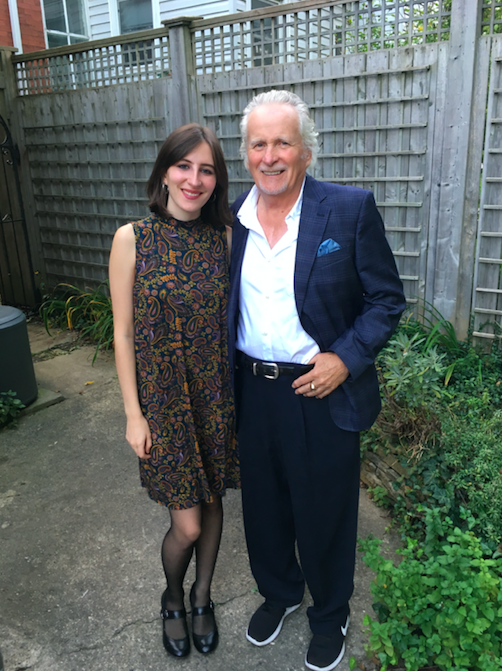
My dad was 53 when I was born, but he had his first child at 20. I have four half-sisters, one sister, and two brothers. I used to love how confused my teachers got when I explained this dynamic. He’d come to pick me up from school, and they’d announce that my grandfather was here, to which I’d proudly correct them “No, that’s my dad. He was married four times and has eight kids and I am the youngest.” I usually tried to explain even further, but someone would cut me off. A boy at school called me an accident once, and I swore at him at recess.
My brothers and sister and I got more time with our dad than my half-sisters did. He retired when I was four, which meant my brothers were six and ten, and my sister was eight. It was clear he didn’t really have experience raising children despite his previous four, but we wouldn’t have had it any other way. My mother was the angel of the house. She cooked gourmet, cleaned immaculately, dressed us adorably, taught us our manners, helped us with our homework, made sure we didn’t watch too much TV, taught us to read and tie our shoes. She was a perfect mother. Our dad was another kid for us to hang out with. He would bang on his guitar and sing Elvis songs, play hockey on the carpet with mini sticks, let us play our video games for too long. He didn’t make us wear our slippers inside. When he dressed us, our clothes would be all mismatched. When he was in charge of dinner, we had whatever we felt like; I have one distinct memory of us being absolutely stoked over having Jos Louis snack cakes for dinner. The tooth fairy would give me twenty dollars per tooth at his house. I don’t mention these instances to undermine my father’s parenting, I mention them to illustrate the childlike joy and wonder I’ve always associated with my father’s role in my early childhood.
My parents separated when I was five. I am incredibly fortunate in that my dad stayed close by, only living a few blocks away. Suddenly, I had two houses. My mom’s house became where life was lived, and my dad’s place was a sort of escape. It was a funhouse. He would let us stay up late and watch PG-13 movies. I used to jump on the couch while he played his guitar and sang about me, calling me a rock star in his songs. He always made me feel like a star.
When I was about 11, my duties as my dad’s personal assistant shifted to a sort of nurse role. Following a few years of irregular chest pain that I didn’t really know about, he had a quadruple bypass. Leading up to and following his surgery, he was in bed a lot. I stayed home from school all the time and spent most of my time at his house with him – I’d already been doing this, but now I had an excuse to do it even more frequently. I’d always known my dad was a lot older and can remember realizing his mortality for the first time when I was about eight, but I never seriously thought about what that meant until around this time. After the surgery, we all helped out a lot, and my half-sisters who I hadn’t really met before came back into his life, but I always felt like my dad was my responsibility more than anyone else’s. I looked after him a lot, cooked for him, and sat on his bed with him while he napped. He used to habitually check his blood pressure and record it in a notebook that he used as a health diary. I’d help him look back and compare the numbers to see how he was progressing. By the time I went into high school at 13, he was a lot better and mostly back to himself, though the occasional scares and off-days would absolutely terrify me. They still do. When I lived inside my dad being sick, it felt like an eternity. But now it looks more like a blip.
On a snowy Wednesday afternoon, I sat down to have a lengthy conversation with my dad as I so often have before, but this time we recorded it. He was wearing his newest dress shirt under a brown leather bomber jacket, hair combed back, sitting up straight on the couch at his new condo – this has been his thirty-first time moving. My dad’s childlike candor shifted into professionalism, despite his overweight chihuahua/poodle Beau sitting at his side. I ask him about his time in newspapers, and he has to take a pause to remember all of his positions over the years.
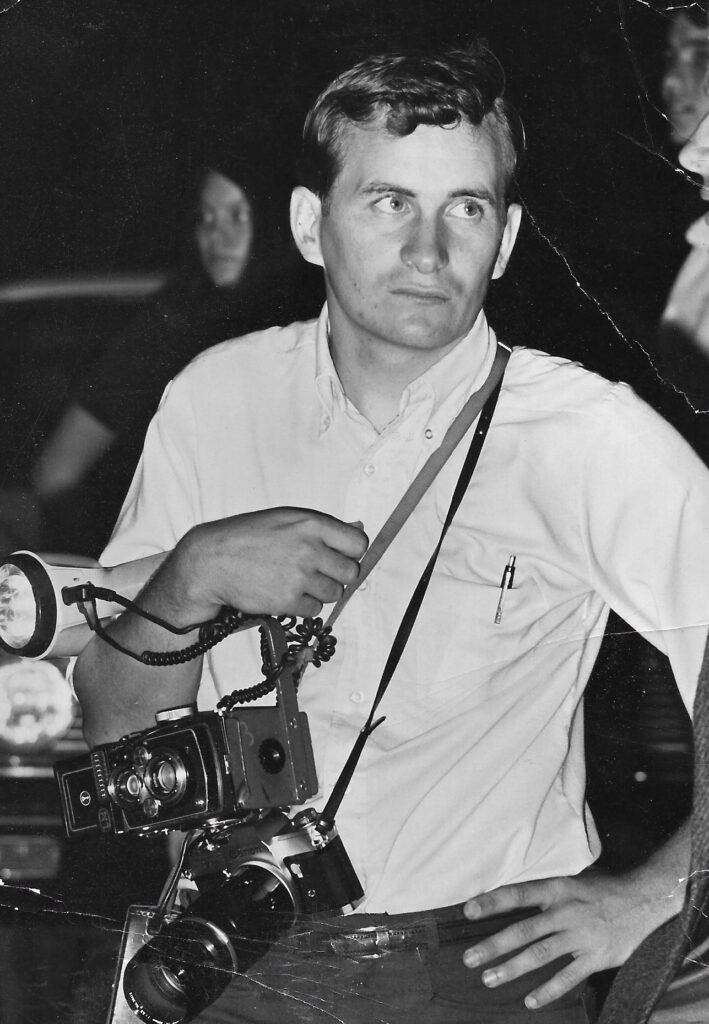
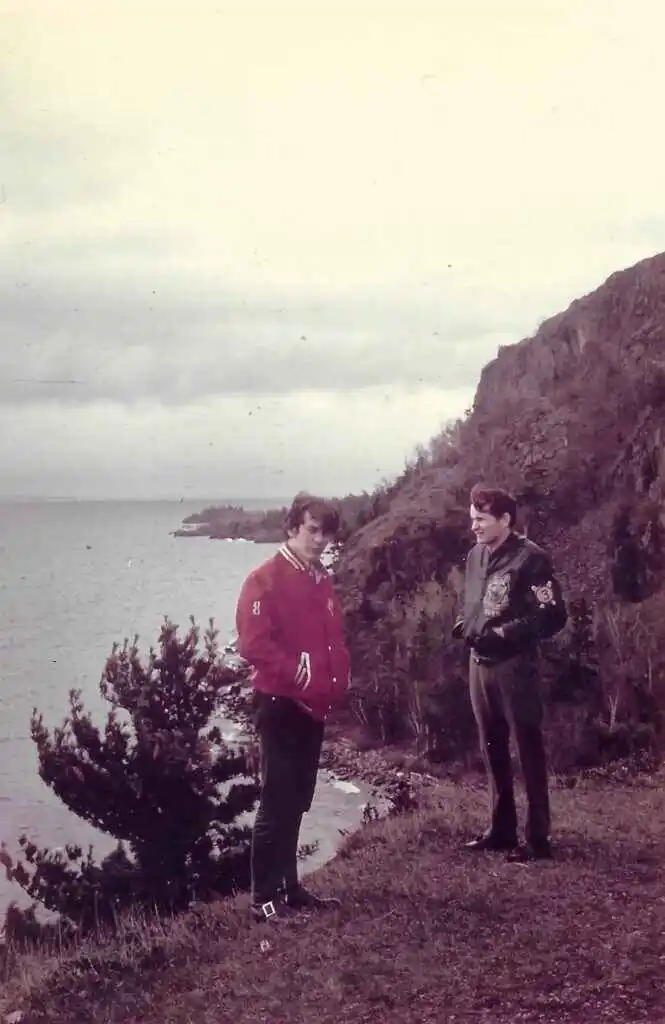
My dad’s career began in 1963 writing sports for the Sault Star. After four years he went to Belvidere, Illinois to fill a position as sports editor while America’s young men were fighting in Vietnam. Then to Windsor for four years on the news desk. Then the Toronto Sun in 1974. Then to Calgary to start the Calgary sun in 1980. Then back to the Toronto Sun. Then back to Calgary to be the CEO of the Sun for 6 years. Then to London to be the Publisher of the London Free Press. Then back to Toronto for CEO and then retirement, which he came out of for a brief stint at the National Post before his final retirement. Remember when I called it a whirlwind earlier? In amongst all of that, he had children in the 60s, 70s, 80s, and 90s. I don’t know how he ever took a rest in those 40 years. I don’t think he did.
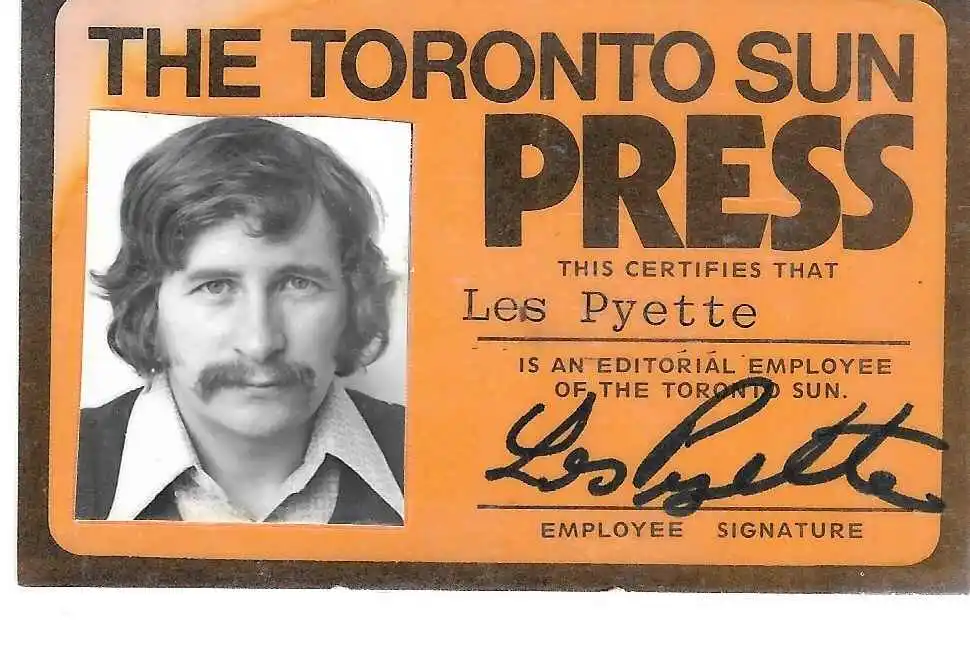
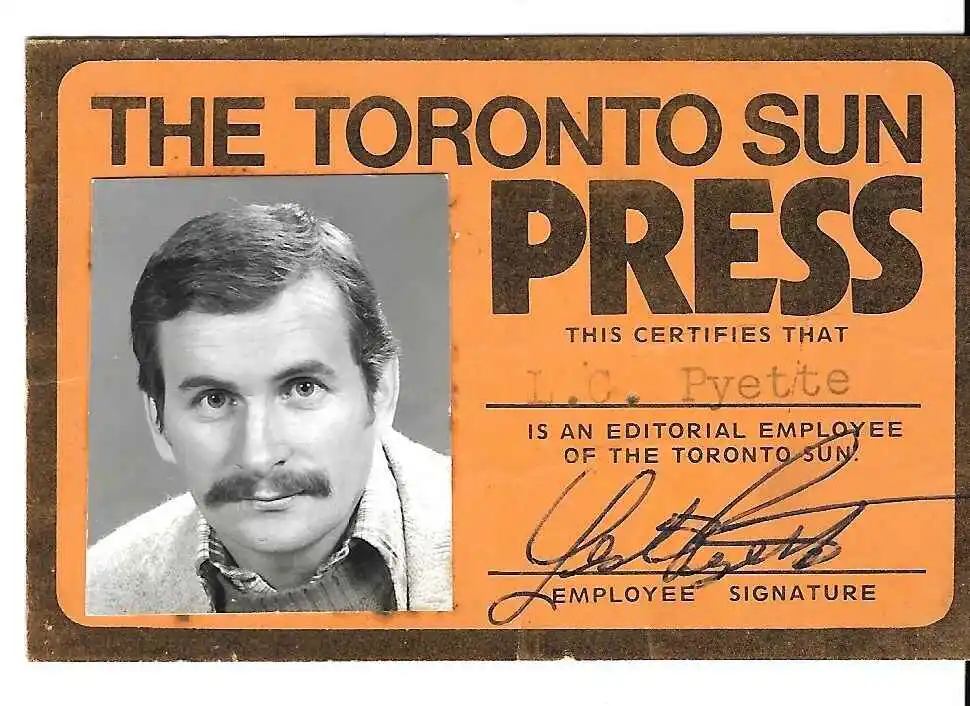
He tells me a condensed version of his career, focusing on the saleable details like a true newspaperman. He tells me a snappy story that I’ve heard before about a slow news day in Toronto, when a magician came in and said he could escape their safe if they locked him in. My dad ran with it and obliged, but things quickly went south when the magician could not escape. They called the fire department who had to open the safe with an ax. All was well, and it made an exclusive story for the Sun that day. I ask him if he’s proud of that story and he raises his eyebrows. A slight laugh comes to him.
“Uh, no. Not really, no.”
A story he is proud of? It turns out my father was instrumental in securing the photos of serial killers Paul Bernardo and Karla Homolka’s wedding. All of the major papers in Canada were trying to get this photobook from the photographers who’d shot it. My dad took a chance, never having seen the photos, and offered the photographers ten grand plus half of all profits they made worldwide selling the photos to Britain, Australia, and Europe. It was an exclusive for the Sun, and the company ended up making a lot of money off of these pictures. Dad agrees with me that this is morbid, but the public still ate it up. Publishing those photos isn’t the story’s main point of pride, however.
On that same day, the CEO of the company came to my dad with a 3500-word speech and asked him to “make it sing.” On the 11 o’clock news, while the papers were going to print, it was announced that the Sun had paid a large sum of money for these photos. The CEO came roaring into my father’s office to question the expense just as the newspaper was coming off the press. My dad’s face brightens as he tells this story.
“They brought it in, and it looked terrific. He sees it and his eyes light up. He says ‘That’s the paper!? Wow wow wow wow wow.’ Two minutes go by and he starts to leave my office, and he says ‘Oh, by the way, how’s my speech?’ And I had it all done. I gave it to him, he looks at it and starts reading it. He looks at me and says ‘You’re my boy, Lester! I’m tellin’ ya!’ The next day, he did the speech word for word of what I wrote. I was very proud of that.”
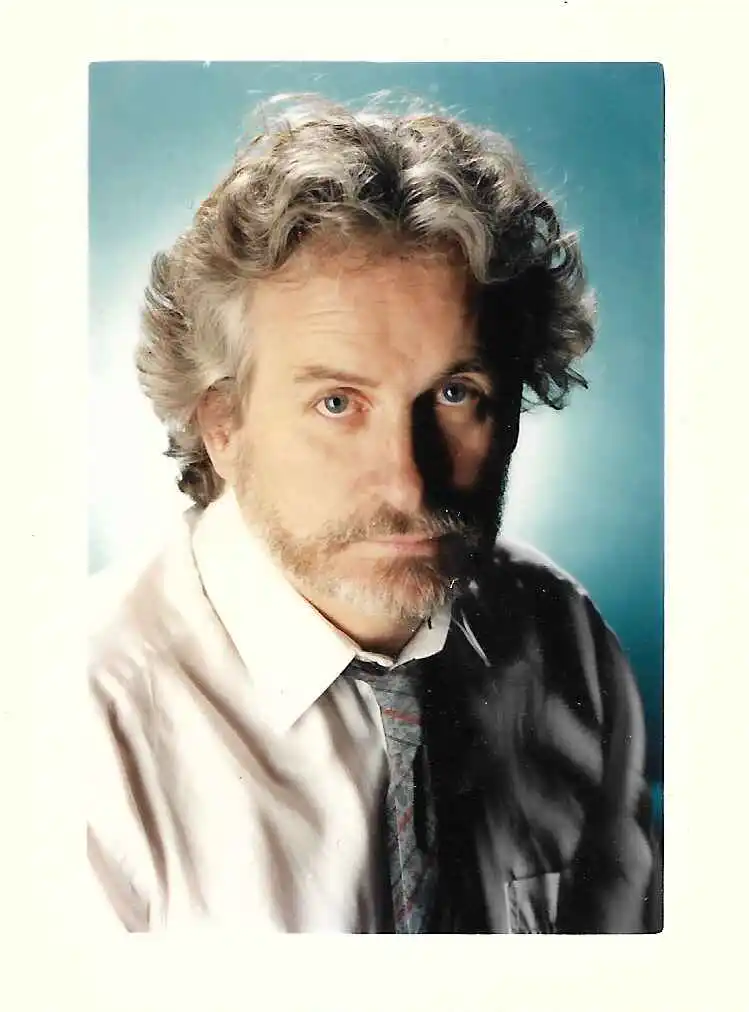
He smiles fondly. I know he misses those days, and I feel a bit sad that I wasn’t alive during the height of his career to see him in action.
When I ask about his family, he tells me about his wonderful mother Dora, and his sister Delores who acted as a second mother when Dora was sick with MS. It was Delores who taught him how to write a story and how to type; she passed away from Lupus about 10 years ago. But he always focuses on the positives. His oldest brother Norris is 84 and “in the best shape of anybody.” His younger brothers, Al and Ronnie, 67 and 70, are “still very active.” His sister Louanne is 80 and has had a “wonderful life with great children.” His older brother Nellie, 81, is living in a nursing home. It’s unsure what’s wrong with him. My dad chalks it up to hard living over the years and then moves on, saying that Nellie is still going, and his mind is still as sharp as ever. He jokes that whenever he visits Nellie, his brother’s first request is to go downstairs for a smoke. My dad doesn’t like to talk about sad things. He calls his own open-heart surgery a “setback.” However, he turns solemn for a moment when he recalls the ends of his parents’ lives.
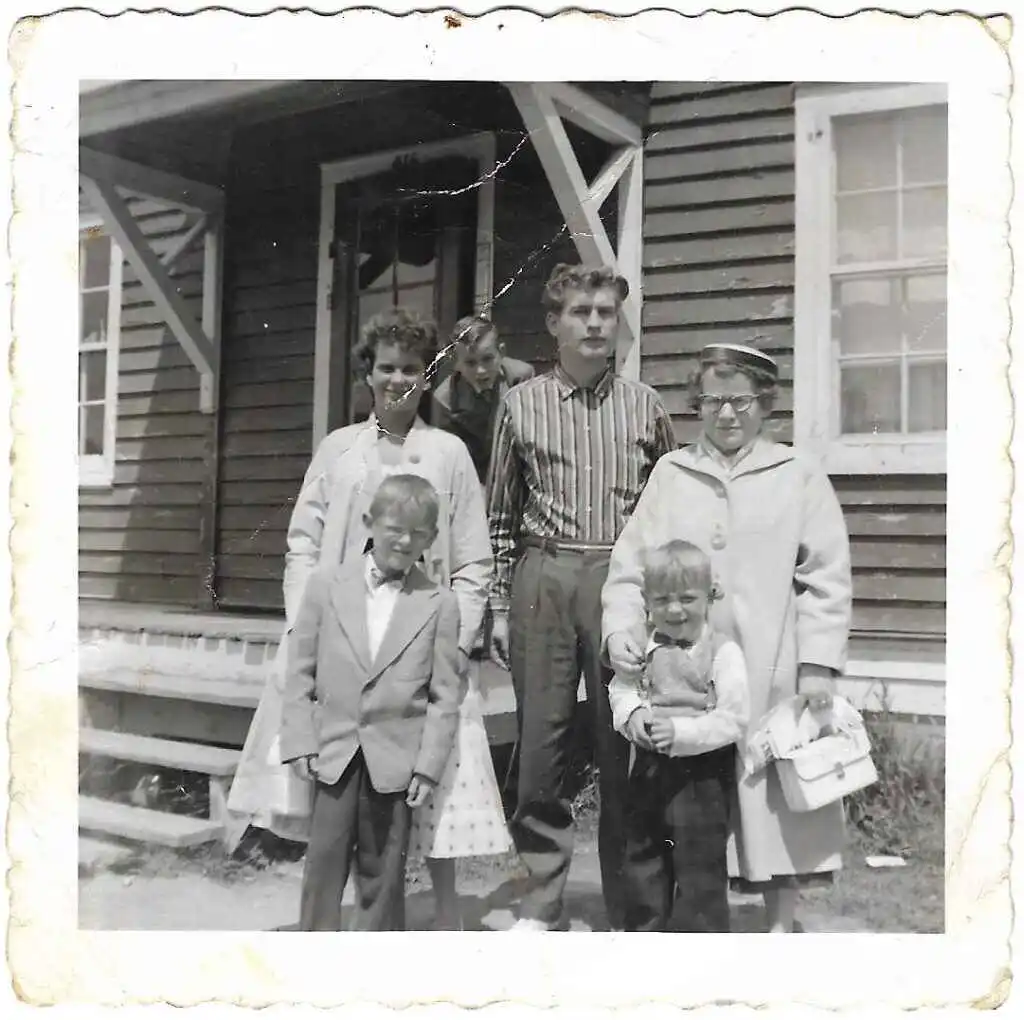
L to R Louanne, Lester, Norris, their mother Dora, Ronnie, Al
His mother spent her last seven years in a nursing home because her MS had progressed to the point where she couldn’t walk, and her husband couldn’t lift her anymore. My grandfather Norman, nicknamed Stormin’ Norman, retired about five years before he died. My dad’s tone is soft when he describes attending his father’s retirement party. “He was a truck driver. All of his friends were at work. He had no hobbies. Drinking beer maybe. He was very sad and uncertain about the future. There’s a lot of people like that.” Tone shifts quickly to light again as my dad states how lucky he is to have always had friends and hobbies in retirement. I never met my father’s parents, but I have an adoration for them because I know how hard they worked, how much my dad loved them, and how much they loved him right back.
It’s important to note that although he is “pushing 75,” my dad does not consider himself a senior. He attributes it to having young children, being interested in what we’re doing and participating with us. My two brothers (23 and 27) live with him, and my sister (25) and I see him very often. He says, “when children are young and full of ideas, energy, and ambition, it rubs off on an old man.” He also gives credit to his dog Beau for getting him out for walks and keeping him on his toes. He is very grateful for the life he has and considers himself very lucky. I ask where he sees himself in 5 years. He’d like to finish a couple of books he’s writing but finds it hard to work without the stress of a deadline. He knows for sure that he will not go back to working, despite offers: “It’s a great game, and I had a ball, for the most part I had a charmed career, but there’s a time to stay home with the puppy now.” Get to know about Grandparents: Young Perspectives
I ask my most serious question: would he be scared if we didn’t live with him? If it was just him and Beau?
My dad only has time to say “good question” before the front door opens and my brother walks in. Beau barks and runs to greet him. It is a break from the silent half hour we have spent together, rare because Beau usually never stops making some sort of noise. My dad laughs, putting back on his childish personality that I know and love. “Right on cue, Nicky!” He turns to me, “am I being too stilted?” Beau hops into his lap. “Oh, here he comes! Big boy! He’s a good doggie! He’s a good pup! He’s a good boy, he’s a good friend.”
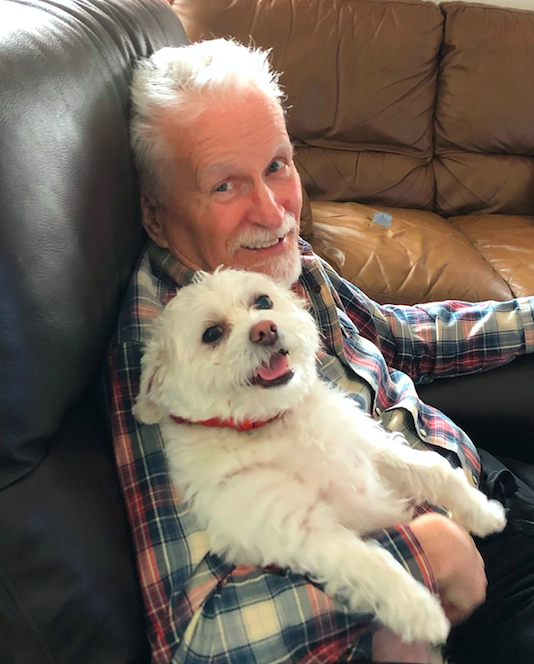
After a moment, he answers my question, though the heaviness is completely lifted. He says he’ll be lonely but jokes that he will probably sleep better at night. He’ll be okay. Maybe will get another dog.
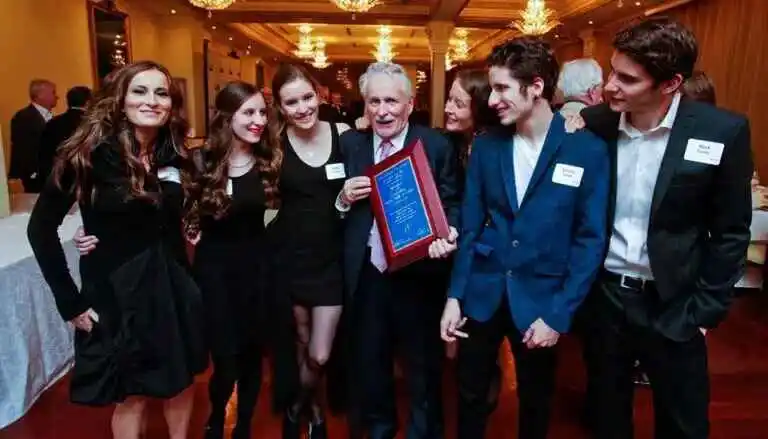
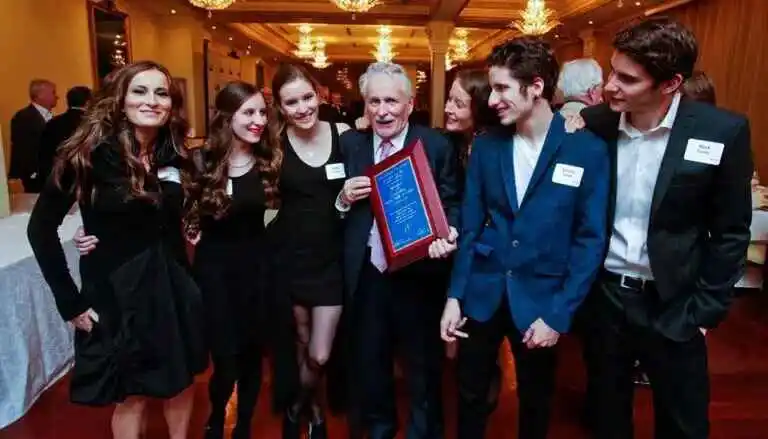
I ask if there’s anything else he wants to add. First, he says no, hoping that he’s given me some “meat on the bones, as they say.” Then after a pause, he adds another moment of pride. “Apart from getting plaques and honorary degrees and all of that, was when I was GM of the Calgary Sun-” This is the first time my dad mentions his honorary doctorate of letters, his induction into the Canadian News Hall of Fame, and the countless other awards he received during his active career, but even still he does this in passing. He tells me about when he was in Calgary for the second time and his boss went to join their competitor. “It was nineteen – oh, the days go by so fast – 1994.” They were going to bring in a new publisher from Toronto, but the staff took up a petition overnight to have my dad take the position instead. Of a staff of 298, 235 people signed it. A trademark quality of his, he gets teary-eyed when he tells this story.
Quickly, when I prod him again about personal life, he adds that he is proud of his kids. I had hoped for some sort of acknowledgement – ‘I’m very proud of my incredible daughter Mattea for writing a story about me’ or something along those lines – but I don’t mind that our discussion has focused on his career. My dad is the kindest man I know. He has shown his love for his children tenfold through his actions. He is the sun in all of our lives, always there and always shining.
At the time of writing this, I’m 21 years old. I’ve unconsciously followed in my dad’s footsteps by becoming a writer. I earned a creative writing award from my school when I was 17; 53 years prior, he’d just landed his first writing job. My 74-year-old father just tried to FaceTime me to show me his Christmas tree, ensuring me that it looks beautiful even without my help. He couldn’t figure out how to flip the camera, so all I saw was my “big old man with no teeth!” He accidentally hangs up and I try to call back but there is no answer. His phone probably died. He doesn’t know he should charge it overnight.
If someone were to ask me today what I am most proud of, I know my answer without hesitation: my dad.