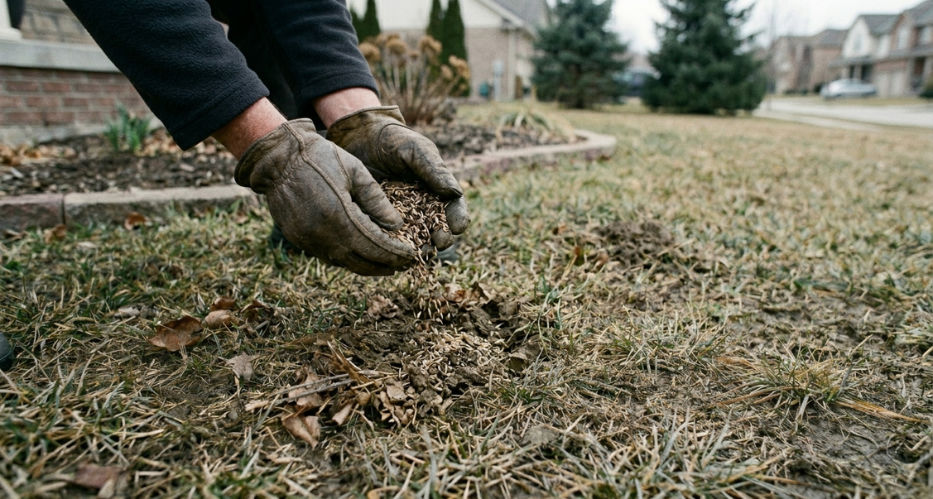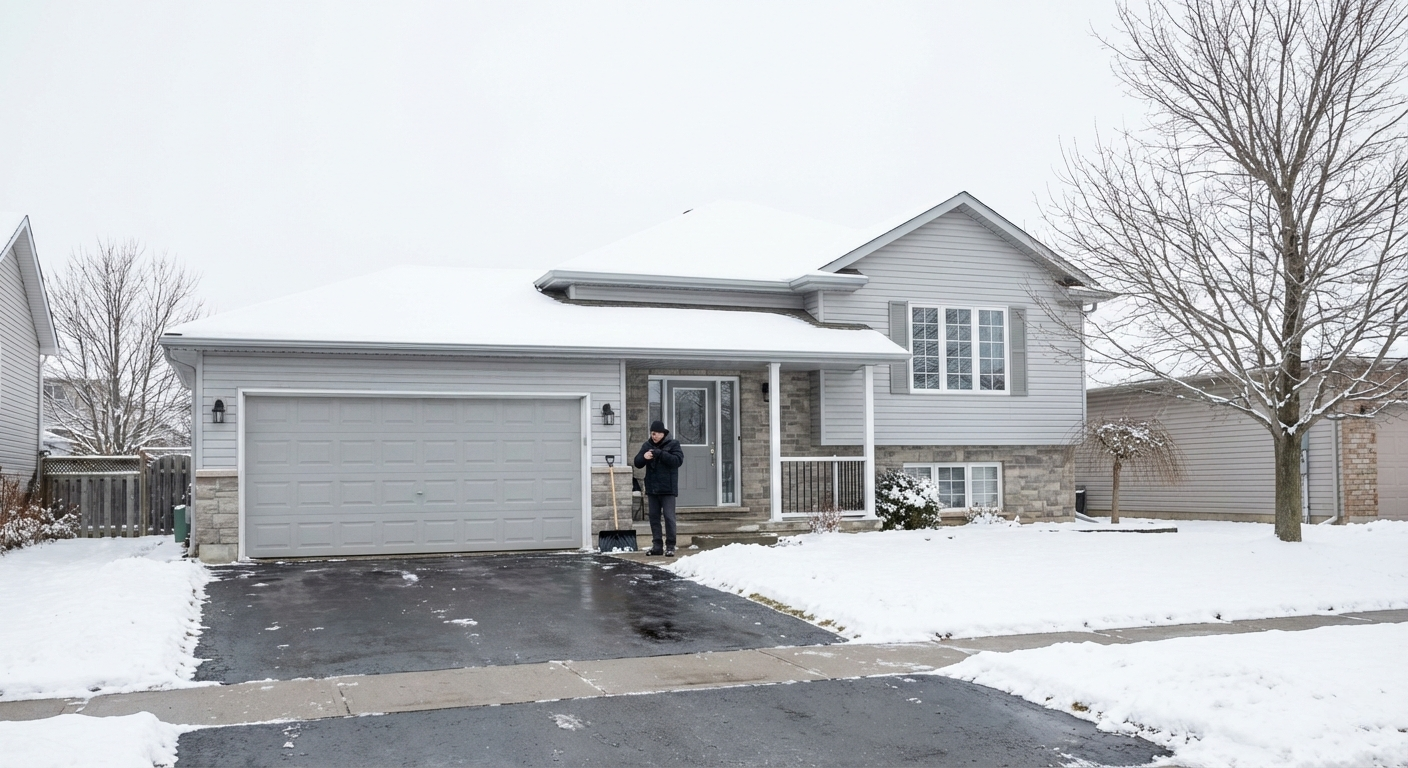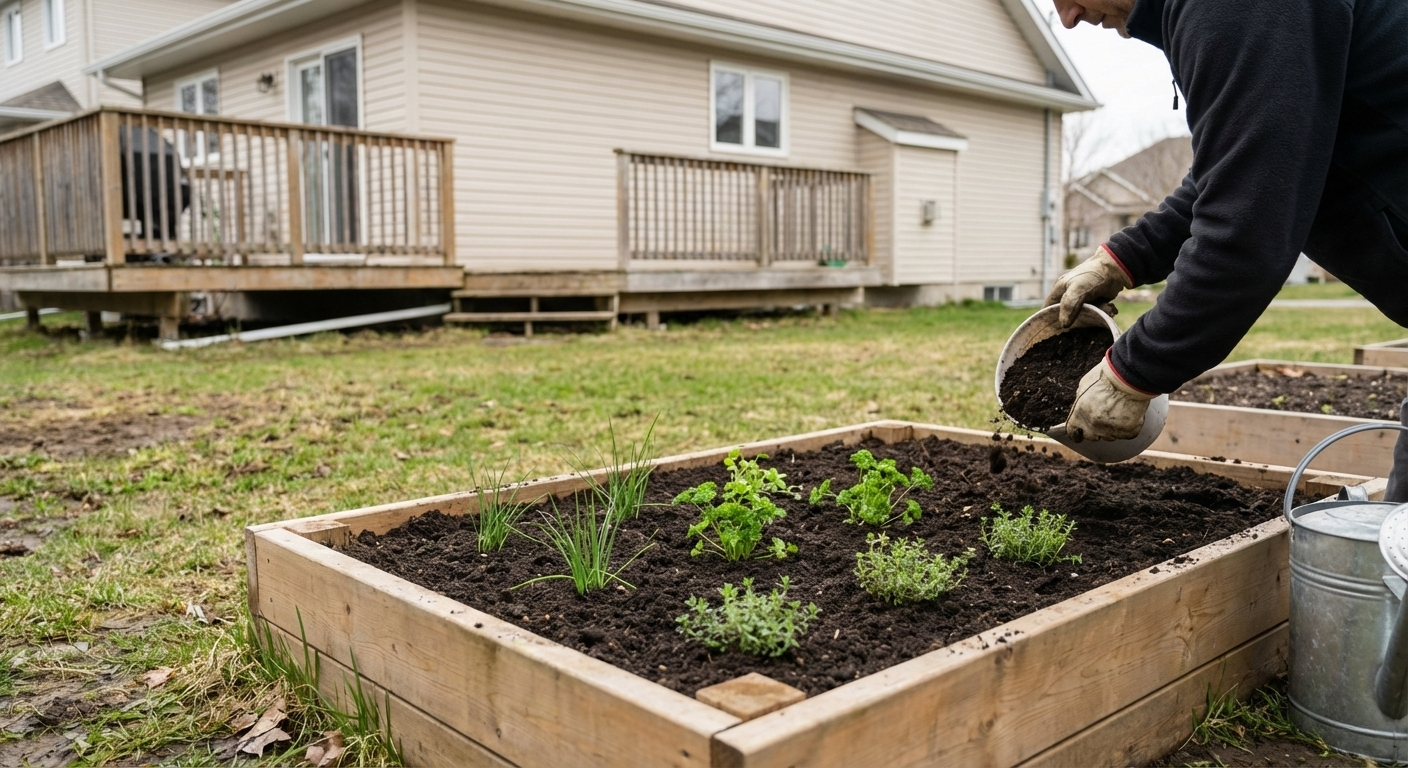

Professional lawn repair service in Canada is the fastest way to bring a heavily damaged lawn back to life after a harsh winter.
In Ontario, winters leave more than just snow behind—they leave compacted soil, matted grass, salt-damaged edges near driveways, and even patches destroyed by rodents or ice.
Many homeowners underestimate how quickly these issues escalate, turning small bare spots into extensive damage that’s costly to fix.
Timing is critical. Acting too early can crush roots and compact soil, while waiting too long allows weeds, mold, and erosion to take over.
A professional approach ensures each step (from debris and leaf removal to aeration, overseeding, and fertilization) is done at the right time for maximum results.
Not only does this restore a thick, resilient lawn, but it also protects property value, prevents long-term damage, and keeps your home safe and visually appealing.
With Custodia’s Home Management Plan, spring lawn repair is handled expertly, on schedule, and without the stress of trial-and-error, leaving your yard healthy and ready for the growing season.
13 Signs Your Lawn Needs Immediate Spring Repair in Canada
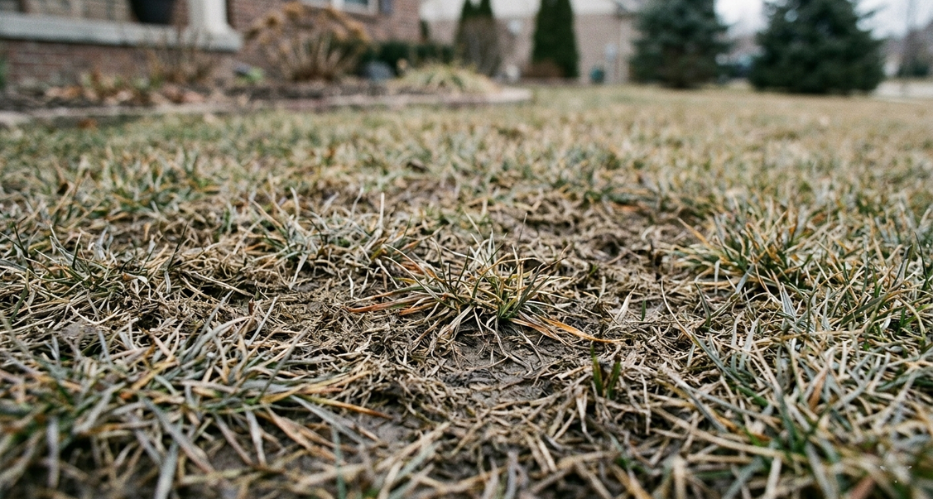
After a Canadian winter, lawn damage does not always show up as obvious bare patches. Many of the most serious problems start below the surface.
For instance, Studies show that winter soil compression and freeze-thaw cycles weaken root systems long before grass fully dies.
Municipal extension services across Ontario often report a spike in lawn failure in late spring because early warning signs were missed.
These indicators signal that your lawn needs repair now, not later.
1. Grass stays gray or straw-colored after snowmelt:
This often indicates crown damage or snow mold stress that will not recover on its own.
2. Footprints remain visible when you walk across the lawn:
This shows severe compaction that blocks oxygen and water movement.
3. Thin grass along sidewalks and driveways:
Salt runoff changes soil chemistry, which prevents normal growth.
4. Matted patches that resist light raking:
These areas trap moisture and increase fungal risk.
5. Uneven ground or soft dips:
Often caused by freeze-thaw cycles and early soil collapse.
And that’s not all. Other overlooked signs include:
6. Visible vole or rodent tunnels:
Are common after heavy snow cover and often mistaken for surface damage.
7. Water is pooling after light rain:
Many conservation authorities flagged a drainage failure after spring floods.
8. Weeds emerging before grass growth:
A sign that turf roots are too weak to compete.
9. Grass pulling out easily by hand:
Indicates shallow or dying root systems.
10. Delayed green-up compared to neighboring lawns:
Often linked to nutrient loss or compacted subsoil.
11. Patchy growth in full-sun areas:
Suggests winter burn or fertilizer depletion.
12. Soil crusting on the surface:
A barrier that blocks seed germination and root expansion.
13. Persistent musty odor:
A hidden signal of fungal activity below the grass layer.
When several of these signs appear together, immediate spring repair is the only way to prevent full lawn failure.
Get a Professional Lawn Inspection Today
Call 1-833-410-4357 or book online for a spring lawn assessment.
Custodia’s Home Management Plan includes customized, seasonal lawn repair services designed for Canadian conditions, so problems are fixed early, not after they spread.
Key Indicators Before Starting Lawn Repair in Canada
To make this easier to spot at a glance, see the infographic below, which clearly shows the key signs your lawn is truly ready for spring repair.
Before repairing a damaged lawn, confirm these conditions are in place.
- Soil moisture is firm, not spongy
- Soil temperature stays above 5–10°C
- Frost has fully melted (late March to mid-May in most of Ontario): Hidden frost pockets can break young roots after repair.
- Visible new growth or swelling buds: This confirms plants have exited dormancy and can recover from stress.
- Stable and safe walking surface: If footprints linger, compaction risk is still high.
[Read: 10 Most Common Mistakes To Avoid When Treating Lawns In Canada]
How Do Professionals Repair A Heavily Damaged Lawn In Spring In Canada?
Here’s how professionals repair a heavily damaged lawn in Canada, step by step, without causing more stress to the soil or grass.
Step 1: Initial Clean-Up and Assessment
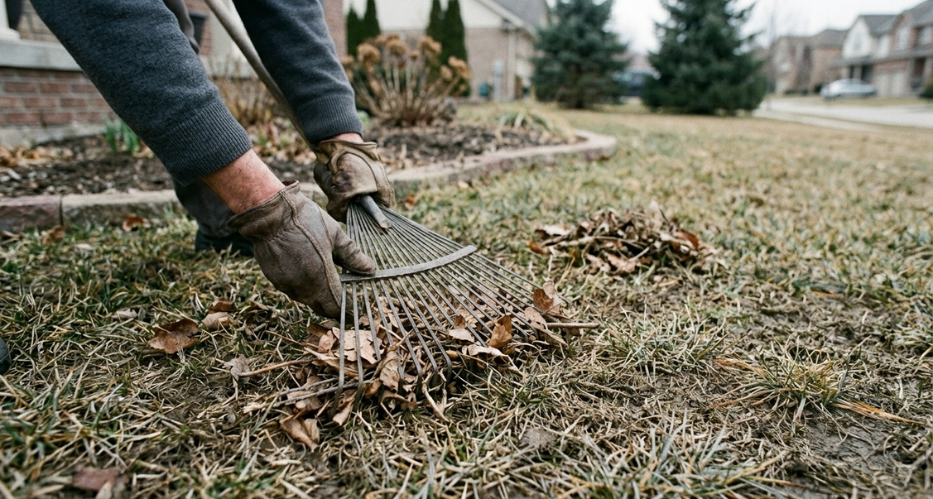
- Rake away leaves, broken branches, and winter debris to expose the soil
• Look closely for snow mold, salt burn near walkways, or vole and rodent tunnels
• Pause if the ground feels wet or spongy. Working too early causes compaction
Step 2: Surface Preparation
- Lightly rake matted grass to improve airflow and sunlight
• Dethatch thick dead layers that block water and nutrients
• Core aerate compacted areas to help roots breathe
• Flush salt-damaged zones with water or apply soil conditioners if needed
Step 3: Repairing Bare Patches
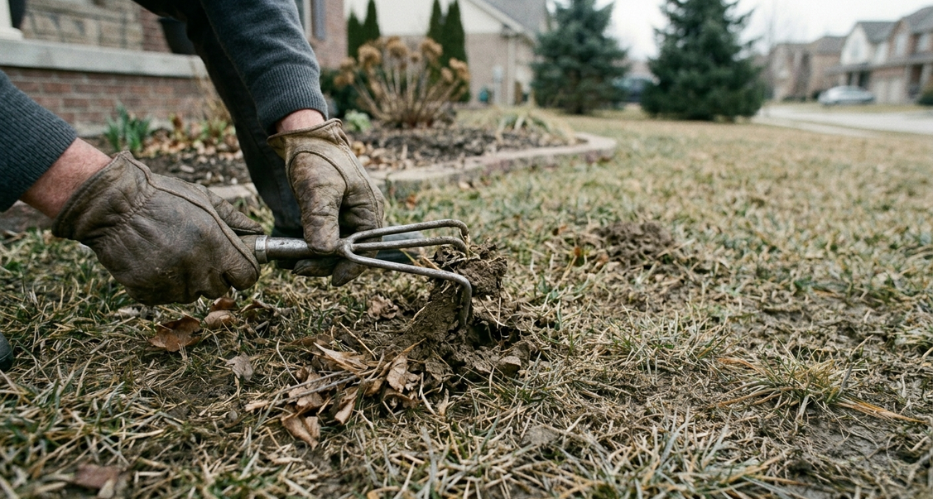
- Loosen the top 1 to 2 inches of soil so roots can spread
• Add a thin layer of quality topsoil or compost
• Spread a Canadian grass seed blend suited to sun or shade
• Gently rake seeds in so they stay moist and protected
Step 4: Watering and Nutrition
- Water lightly twice a day for the first 2 to 3 weeks
• Use a starter or slow-release fertilizer to support root growth
• Skip pre-emergent weed products, or new grass will fail
Step 5: Maintenance and First Mow
- Stay off repaired areas for at least 3 to 4 weeks
• Mow only when the grass reaches about 10 cm
• Keep the mower high to avoid stress and setbacks
What Are the Most Common Lawn Repair Mistakes Homeowners Make in Spring in Canada?
Most lawn damage in spring is not caused by winter alone.
It is caused by well-meaning homeowners rushing the repair process without understanding soil and timing.
Below are the most common day-to-day mistakes professionals see across Ontario every spring.
1. Working on wet or spongy soil
Walking or raking wet ground compresses soil pores, restricting oxygen and water movement needed for root recovery and even grass growth.
2. Overwatering newly seeded areas
Constant saturation drowns seedlings, promotes fungal disease, and washes seed away before proper root establishment begins.
3. Using the wrong grass seed mix
Many store blends are not suited for Canadian freeze-thaw cycles, shade levels, or heavy spring moisture conditions.
4. Skipping dethatching or aeration
Compacted soil and thick thatch prevent seed-to-soil contact, slowing germination and creating uneven, patchy results.
5. Mowing too early or too short
Cutting young grass too soon weakens roots, stresses seedlings, and reduces long-term lawn density and resilience.
Benefits of Hiring a Professional Lawn Repair Service in Canada
Professional lawn repair removes the guesswork. Safety comes first. Trained crews avoid injuries and prevent soil damage during repairs.
Efficiency matters too.
Pros use the right tools, seed depth, and watering plans for faster germination. Expertise makes the biggest difference. Correct seed blends, fertilizer timing, and soil prep protect your lawn long term.
Hiring professionals like Custodia also helps preserve property value and prevents recurring damage year after year.
Spring Lawn Repair FAQs Ontario Homeowners Ask
1. How long does it take for a repaired lawn to grow back in the spring in Canada?
Most lawns show visible growth within 10 to 14 days, with full thickening taking four to six weeks.
2. Can I fix lawn damage caused by salt and snow mold?
Yes. Flushing salt and reseeding early prevents long-term soil toxicity and restores turf health.
3. What grass seed works best for lawn repair in Ontario?
A mix of perennial ryegrass, Kentucky bluegrass, and fine fescue offers durability and fast recovery.
4. How often should I water a newly repaired lawn in spring?
Light watering twice daily keeps seeds moist without drowning roots during early germination.
5. Is professional lawn repair worth it in Ontario?
Yes. Professionals prevent costly mistakes, speed recovery, and protect long-term property value.
Conclusion
Repairing a heavily damaged lawn in spring is about timing, technique, and care.
Done right, it restores curb appeal, protects your soil, and sets your property up for a healthy season.
Let Custodia handle it for you.
Book your spring lawn repair online or call 1-833-410-4357 today.
Ask about our Home Management Plan for personalized, seasonal lawn care across Ontario.