The 1/3 rule of mowing in Canada is one of those lawn care principles that sounds almost too simple to matter, but it makes all the difference between a lawn that thrives and one that slowly falls apart.
Ask any homeowner who has watched their once-green lawn turn yellow and patchy after a mow, and they will tell you something clearly went wrong.
It happens more than you think.
Life gets busy, the grass grows a little too tall, and you finally get a dry weekend to cut it right down and get ahead of it. It looks tidy at first.
Then a few days later, the lawn looks stressed, thin, and beaten down, and most homeowners have no idea why.
Ontario homeowners deal with this every season.
You get a late spring where the grass barely moves, then suddenly it shoots up fast in June.
Dry summers put the turf under pressure, and fall arrives quickly, catching many people off guard on when to do their last mow before winter sets in.
Every one of those moments is where knowing and following the 1/3 rule makes a measurable difference to your lawn’s health and appearance.
Seasoned lawn care professionals across Ontario will tell you that mowing mistakes, not pests or poor soil, are the number one cause of weak and thin lawns.
The good news is it is one of the easiest problems to fix once you understand the rule properly.
While you are thinking about outdoor home care, check out Custodia’s professional Lawn Mowing Services in Ontario and our Home Management Plan, which offers personalized services at incredible discounts for seniors.
Book a free consultation online or call 1-833-410-4357.
What Does The 1/3 Rule Of Mowing Mean For Canadian Lawns?
The 1/3 rule is straightforward. Every time you mow, you should only remove one-third of the total grass blade length, nothing more.
It sounds like a small detail, but it is the kind of detail that separates a lawn that looks great all summer from one that struggles to recover every other week.
Why Should You Never Cut More Than One-Third Of The Grass Blade?
Here is what actually happens beneath the surface when you cross that one-third line:
Root shock
Removing too much blade forces the plant to redirect energy away from roots toward leaf regrowth, slowly weakening the entire root system over time.
Moisture loss
Shorter grass exposes the soil surface faster, causing it to dry out much quicker between rain or watering sessions, especially during Ontario summers.
Scalping risk
Cutting into the lower brown stem zone damages the growing point of the grass plant, leaving behind bare, straw-like patches that are slow to recover.
Weed invasion
Thin and stressed grass creates open gaps in your lawn where opportunistic weeds like crabgrass and dandelions move in and establish quickly.
Disease vulnerability
Over-cut grass has weakened defenses, making it far more susceptible to common lawn diseases like brown patch and leaf spot in humid conditions.
[Read: Is The Landlord Responsible For Mowing The Lawn In Ontario?]
How Does The 1/3 Rule Support Lawn Health In Ontario’s Climate?
Ontario’s climate puts lawns through real seasonal stress, and the 1/3 rule acts as a consistent buffer against that pressure throughout the year.
Here is a clear breakdown of how it supports your lawn across every season:
Season | Common Lawn Challenge | How The 1/3 Rule Helps | Recommended Mowing Frequency |
|---|---|---|---|
Spring | Uneven and unpredictable growth spurts after snowmelt | Prevents accidental scalping during early and irregular growth periods | Every 7 to 10 days as growth picks up |
Summer | Heat stress, drought pressure, and dry soil conditions | Keeps blade length high enough to shade roots and lock in ground moisture | Every 5 to 7 days during peak growing season |
Fall | Slowing growth as grass shifts toward winter dormancy | Avoids over cutting as the plant conserves energy for cold weather survival | Every 10 to 14 days as growth slows down |
Winter | Dormant grass with no active growth | No mowing needed but final cut height before winter matters greatly | One final mow before first frost |
Why Is The 1/3 Rule Important For Healthy Grass Growth?
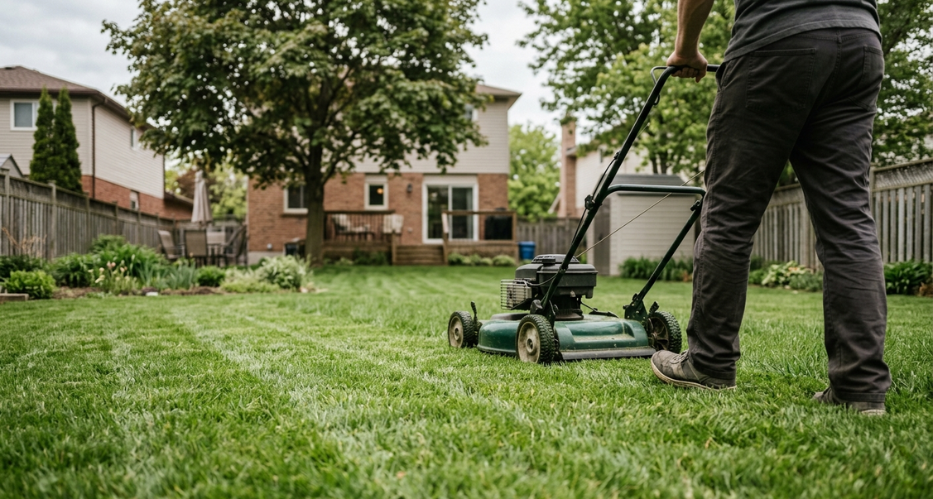
Most homeowners focus on how the lawn looks after a mow, but healthy grass growth starts below the surface, and the 1/3 rule protects exactly that.
How Does Mowing Height Affect Root Strength And Drought Resistance?
Taller grass grows deeper roots, and deeper roots reach moisture that shorter grass simply cannot access during dry Ontario summers.
Here is what mowing height directly affects:
Root depth: Grass kept at the right height develops longer, stronger roots that anchor firmly and access deeper soil moisture reserves consistently.
Drought tolerance: Longer blades shade the soil surface, reducing evaporation and keeping the ground cooler during hot and dry summer stretches.
Recovery speed: Grass with strong roots bounces back faster after heat stress, heavy foot traffic, or periods of lower rainfall across the season.
Nutrient absorption: Healthy root systems pull more nutrients from the soil efficiently, reducing your need for frequent fertilizer applications throughout the growing season.
Overall resilience: Well-rooted grass resists disease, pests, and seasonal temperature swings far better than grass that is regularly cut too short.
What Happens If You Cut Too Much Grass At Once?
Cutting too much in one session triggers a stress response that ripples through the entire plant.
Here is a quick look at the impact:
What Happens | Why It Matters | How Long Recovery Takes |
|---|---|---|
Root energy redirected to leaf regrowth | Weakens root system and reduces drought resistance significantly | 1 to 2 weeks minimum |
Soil exposed to direct sunlight | Speeds up moisture loss and raises soil temperature dangerously | Immediate and ongoing |
Growing point damaged or removed | Stops normal blade regrowth and leaves patchy bare spots behind | 2 to 4 weeks or longer |
Grass immunity drops sharply | Opens the lawn to fungal disease and pest activity quickly | Varies by condition |
What Is The Ideal Mowing Height For Lawns In Ontario, Canada?
Getting the mowing height right is not guesswork.
It depends on your grass type and the time of year, and Ontario homeowners have specific conditions to account for.
How Tall Should Common Canadian Grass Types Be Kept?
Different grass types have different ideal heights, and cutting them all the same way is one of the most common mistakes Ontario homeowners make.
Here is a practical guide:
Grass Type | Ideal Mowing Height | Minimum Safe Height | Common In Ontario |
|---|---|---|---|
Kentucky Bluegrass | 6 to 8 cm | 5 cm | Very common in residential lawns |
Tall Fescue | 7 to 9 cm | 6 cm | Popular in shadier Ontario yards |
Fine Fescue | 5 to 7 cm | 4 cm | Common in low maintenance lawns |
Perennial Ryegrass | 5 to 7 cm | 4 cm | Often mixed with bluegrass blends |
Creeping Red Fescue | 5 to 8 cm | 4 cm | Shade tolerant and widely used |
How Do Seasonal Changes Affect Mowing Height In Ontario?
Ontario seasons shift quickly, and your mowing height should shift with them.
Here is what experienced lawn care professionals recommend across the year:
Spring: Start mowing slightly lower to remove winter damaged tips, then gradually raise the height as the season warms up and growth accelerates.
Summer: Keep grass at its maximum recommended height to shade roots, retain moisture, and protect against heat and drought stress effectively.
Fall: Gradually lower the cutting height as the season ends, finishing your last mow at around 5 to 6 cm before the first frost arrives.
Winter: No mowing needed, but leaving grass too long going into winter encourages snow mold and other cold weather fungal issues.
Transition periods: During spring and fall shoulder seasons, adjust height gradually over several mows rather than making one dramatic change all at once.
When Should You Stop Mowing Before Winter In Canada?
Most Ontario homeowners stop too early or too late, and both cause problems going into winter.
Here is the general guidance professionals follow:
Final mow timing
Aim to do your last mow in late October or early November, just before the first hard frost settles in for the season.
Final cut height
Cut to around 5 to 6 cm for your last mow, short enough to prevent snow mold but tall enough to protect roots through winter.
Avoid cutting dormant grass
Once grass has stopped growing and gone dormant, running a mower over it causes unnecessary damage to already vulnerable blades.
What Time Of Day Is Best For Mowing Grass?
Mid morning: After the morning dew has dried but before the peak afternoon heat arrives, giving grass the best conditions to recover quickly and cleanly.
Avoid early morning: Wet grass from overnight dew clogs mower blades, cuts unevenly, and increases the risk of spreading fungal disease across your lawn.
Avoid midday: Mowing during peak heat adds stress on top of stress, leaving grass more vulnerable to scorching and slower to recover after cutting.
What Is Included In A Professional Lawn Mowing Service In Ontario?
Hiring a professional lawn care service is not just about saving time.
It is about getting consistent, knowledgeable care that protects your lawn through every season, something that is hard to replicate with a weekly DIY mow.
So, What Do Lawn Care Services Cover?
Custodia delivers reliable, subscription based grass cutting for homeowners across Ontario from mid-April through October.
Here is exactly what you get with every visit:
Front and back yard mowing done properly and consistently every scheduled visit
Whipper snipper edge trimming along all borders, beds, and hard surfaces
Blowing debris off driveways and walkways for a clean finish every time
The same contractor services your property each visit so they know your lawn well
Grass clippings remain on the lawn as required by city bylaw in most Ontario regions
A consistently maintained lawn improves your home’s curb appeal and keeps your property looking its best all season long.
Conclusion
Following the 1/3 rule of mowing in Canada is the single most impactful habit you can build for a healthier, stronger lawn.
Stick to it every season, adjust your height, time your mows right, and your lawn will show the difference.
Custodia makes that easy for Ontario homeowners. Book a free consultation online or call us 1-833-410-4357.
Lawn Mowing FAQs In Ontario
How Much Does Lawn Mowing Cost In Canada?
Professional lawn mowing in Canada typically costs between $40 and $80 per visit depending on property size.
Is Hiring A Lawn Care Service Worth It?
Yes. Consistent professional mowing protects your lawn and saves you time every week.
How Do I Pick A Lawn Care Company In Ontario?
Look for local experience, clear pricing, and consistent scheduling. Custodia checks all three.
Do Professionals Follow The 1/3 Mowing Rule?
Yes. Custodia’s trained contractors follow the 1/3 rule on every single visit automatically.