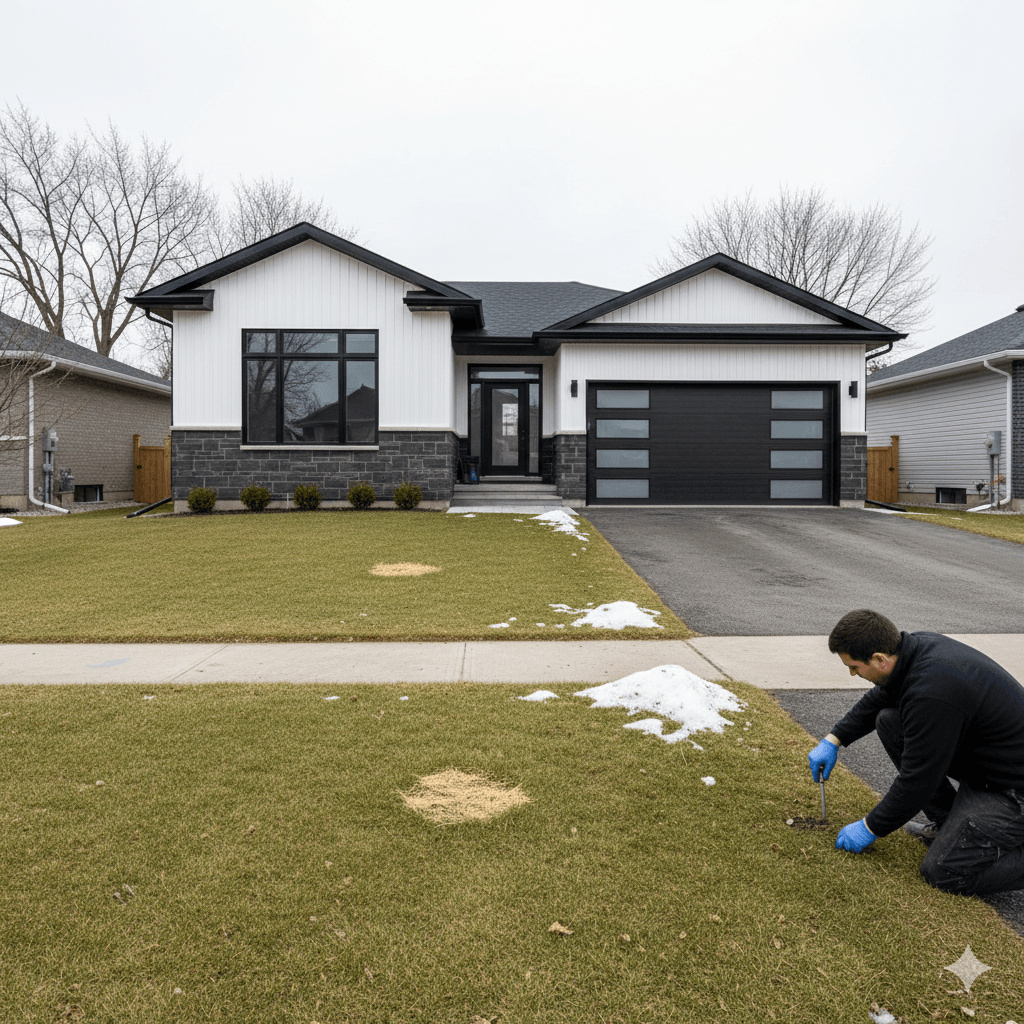
If you notice patchy grass, strange rings, sudden yellowing, slimy areas, or dark spots spreading across your lawn, you may have a lawn disease emergency on your hands.
In Ontario, waiting too long can turn a small issue into full lawn failure. Lawn disease spreads quietly, damages roots first, and becomes harder to reverse with time.
Canadian lawns are especially vulnerable.
Humid summers, heavy morning dew, poor drainage, and long winters create ideal conditions for fungal lawn diseases.
What starts as a mild discoloration can quickly lead to dead patches, weak turf, and soil imbalance. Many homeowners mistake these warning signs for weather stress, which delays treatment and increases repair costs.
What many homeowners do not realize is that early detection makes all the difference.
Spotting lawn disease early can stop it from spreading and save you from costly repairs later. And understanding what to look for helps you act with confidence instead of guesswork.

This is why many homeowners choose our Home Management Plans.
We offer comprehensive lawn and yard care, seasonal inspections, and ongoing maintenance that keep your lawn, garden, and entire property healthy all year round.
What Are the Early Signs of Lawn Disease in Canada?
Lawn disease rarely shows up all at once. It starts with small clues that are easy to miss if you do not know what to watch for.
In Canada, these early signs often appear in spring and fall, when moisture and temperature shifts stress the lawn. Catching them early can stop damage before it spreads underground.
Visual Warning Signs Homeowners Often Miss

1. Distinct circular or ring-shaped patches
Lawn diseases often spread outward beneath the soil, creating circles, arcs, or crescents with defined edges. These patterns grow larger over time and do not fade evenly like drought stress, making them a strong indicator of fungal activity underground.
2. Straw-colored, brown, or yellow patches that do not recover
When discolored areas remain unchanged after watering or rainfall, roots are often damaged. Fungal diseases block nutrient and water uptake, causing grass to dry out from below even when moisture appears adequate at the surface.
3. Dark green or oily-looking areas
Some lawn diseases cause grass to darken before thinning. This misleading “healthy” color is actually a stress response. It often delays treatment while fungi continue spreading unnoticed beneath the turf.
4. Frog-eye patterns with green centers
This pattern forms when fungi disrupt nutrient movement in the soil. Grass dies in a ring while the center stays green, creating a clear visual signal that the issue is biological, not related to mowing or watering habits.
5. Uneven morning dew patterns
Healthy lawns dry evenly as sunlight increases. Diseased areas stay wet longer because fungal growth traps moisture at the surface, creating ideal conditions for further spread before visible damage appears.
Texture and Substance Changes That Signal Disease
1. Slimy or greasy grass, especially in the morning
A slick texture often means active fungal growth. High humidity overnight allows pathogens to flourish, and this greasy feel is usually present before widespread discoloration becomes visible.
2. Grass that stays matted after rain or watering
Fungal infections weaken blade structure, causing grass to clump and lie flat. Healthy turf should bounce back quickly, so persistent matting is a reliable early warning sign.
3. Powdery residue, rust dust, or red thread-like growth
These substances are fungal spores spreading across the lawn. They often transfer onto shoes or mower wheels, accelerating infection across healthy areas if not addressed early.
4. Grass that tears instead of cutting cleanly
Diseased blades lose strength and shred during mowing. Ragged cuts increase stress and open new entry points for pathogens, allowing disease to spread faster with each mow.
5. Sour or musty smells near affected patches
Active fungal colonies release organic compounds as they break down plant tissue. A damp, earthy, or sour smell often signals decay happening below the surface before grass visibly collapses.
6. Spongy soil under thinning areas
Fungal breakdown of organic matter creates unstable soil structure. This spongy feeling indicates compromised roots and reduced oxygen flow, making recovery difficult without intervention.
7. Recurring damage in the same lawn areas each year
When the same spots fail repeatedly, soil-borne pathogens are usually present. These fungi survive winter and reappear annually, regardless of weather, pointing to a deeper lawn health issue.
The Dangers of Leaving a Diseased Lawn Unattended (Risks of Delay)
Leaving a diseased lawn untreated is more than a cosmetic issue. Over time, it creates real risks for your health, safety, and property value.
Lawn disease spreads fast in Canadian weather, and once roots are damaged, recovery becomes expensive.
1. Health risks for families and pets
Active fungi release spores into the air and soil. These can trigger allergies, breathing irritation, and skin reactions, especially for children, seniors, and pets who spend time outdoors.
2. Increased safety hazards around your home
Diseased lawns thin out and soften the ground. This creates uneven surfaces, muddy patches, and hidden holes that increase slip, trip, and fall risks.
3. Decline in home value and curb appeal
Patchy, dying grass signals poor property care. This lowers curb appeal and can impact resale value or rental interest.
4. Spread to gardens and neighbouring lawns
Untreated disease does not stay contained. It spreads through soil, tools, and water runoff.
Common Lawn Diseases in Canada and How to Identify Them (By Season and Symptoms)
Lawn diseases in Ontario, Canada tend to follow predictable seasonal patterns.
When you know what shows up and when, it becomes easier to spot problems early and limit damage.
Many diseases look similar at first, yet each has clear signs tied to weather, moisture, and timing.
The table below breaks down the most common lawn diseases in Canada, when they appear, and what they reveal about your lawn’s condition.
| Lawn Disease | When It Appears in Canada | Key Visual Signs | What It Tells You |
|---|---|---|---|
| Snow Mold | Early spring after snow melts | Gray or pink matted patches, flattened grass, musty smell | Moisture was trapped under snow, weakening grass over winter |
| Red Thread | Spring and fall | Pink or red thread-like strands on grass tips | Lawn stress, often linked to low nitrogen and poor airflow |
| Dollar Spot | Late spring through fall | Small straw-colored patches, coin-sized, hourglass blade lesions | Excess moisture and nutrient imbalance |
| Brown Patch | Summer, especially humid nights | Large circular brown patches with yellow edges | Heat, humidity, and overwatering |
| Fairy Ring | Summer to early fall | Dark green rings, mushrooms, uneven growth | Soil issues affecting moisture movement and root access |
Is My Lawn Diseased or Just Stressed? (How to Tell the Difference)
This is one of the hardest calls for homeowners in Canada.
Lawn stress and lawn disease can look similar at first. Yet the cause and the fix are very different. Knowing the difference helps you avoid wasting time and money.
Here are 4 ways to tell them apart:
1. Pattern and spread
Disease creates clear shapes like circles, rings, or patches that slowly grow. Stress from heat or drought looks more even and fades across larger areas.
2. Response to water
Stressed grass improves within days of proper watering. Diseased grass does not recover and may worsen because moisture feeds fungi.
3. Blade and surface feel
Diseased grass often feels slimy, greasy, or matted in the morning. Stressed grass feels dry and brittle instead.
4. Root condition
If turf lifts easily or roots appear dark and weak, disease is often present below the surface.
Early diagnosis helps protect your lawn before damage spreads.
What Causes Lawn Disease in Canada
Lawn disease in Ontario is rarely caused by one mistake.
It usually develops when weather, soil conditions, and maintenance habits create the right environment for fungi to grow. Once these factors line up, disease can spread quickly beneath the surface.
- Excess moisture and humidity
Heavy rain, morning dew, and poor drainage keep grass wet for long periods. This moisture allows fungal spores to activate and multiply, especially in spring and fall.
- Poor airflow and shaded areas
Lawns with limited sunlight or overcrowded growth dry slowly. Fungi thrive when air cannot circulate freely around grass blades.
- Compacted or imbalanced soil
Soil that lacks oxygen or nutrients weakens roots. Stressed grass becomes more vulnerable to infection and slow recovery.
- Overwatering or improper irrigation timing
Watering late in the day keeps lawns wet overnight. This encourages fungal growth instead of healthy drying cycles.
- Improper mowing and fertilizing
Cutting grass too short or over-fertilizing stresses turf. Weak grass cannot defend itself against disease.
In Canadian climates, disease often results from small issues adding up. Correcting the cause is just as important as treating the symptoms.
Why Early Lawn Disease Detection Saves Your Lawn and Your Time
Lawn disease in Canada rarely fixes itself. When early signs are ignored, damage spreads below the surface and recovery becomes harder and more expensive.
Acting early protects your grass, your soil, and the time you invest in your home.
Knowing what to look for gives you control. And getting help at the right moment prevents repeat problems season after season.
If you want peace of mind, a prompt lawn inspection, and reliable yard and lawn maintenance, book a consultation online or call 1-833-410-4357.
Our Home Management Plans help keep your lawn and entire property healthy all year round.