Spring gardening tasks in Ontario should begin once soil temperatures consistently reach 10°C and the ground is no longer frozen or waterlogged; typically between late March and early May depending on your region.
For most Ontario homeowners, the six (6) most important tasks to tackle first are:
- Clearing winter debris
- Pruning trees and shrubs
- Amending soil with compost
- Starting seeds indoors
- Getting ahead of weeds early, and
- Applying mulch once the soil has warmed.
Getting these done in the right order and at the right time is what separates a thriving Ontario garden from one that struggles all season.
Of course, not every homeowner has the time, tools, or physical ability to work through every task before the season slips away.

If you’d rather have it done right the first time, our professional garden care services in Ontario are available to handle everything from spring cleanup to full bed preparation; so your garden hits the ground running.
Seniors in Ontario can also explore our home management plan, which bundles personalized home and garden care services at incredible discounts designed with your needs in mind.
Not sure where to start?

You can book a free professional consultation online and get expert guidance tailored to your specific garden and property; no commitment required.
What Spring Gardening Tasks Should Ontario Homeowners Do First After Winter?
After a long Ontario winter, it is tempting to rush outside the moment you spot a sunny day in March. But jumping in too early can do more harm than good.
The real question is not whether you are eager; it is whether your garden is actually ready for you.
So, How Do You Know When Your Ontario Garden Soil Is Ready to Work in Spring?
Your soil will tell you when it is ready. Grab a handful and squeeze it. If it crumbles apart easily, you are good to go.
If it holds together in a muddy clump, give it another week. Working waterlogged soil destroys the structure your plants depend on all season.
Quick signs your Ontario soil is ready:
- It crumbles when squeezed — moisture levels are balanced and safe to dig without causing compaction
- No ice patches remain — ground frost has fully retreated from the top 2–3 inches
- Soil temperature reads 10°C+ — use an inexpensive soil thermometer for a reliable reading
What Does Frost Heave Do to Ontario Perennials and How Do You Fix It?
Ontario’s brutal freeze-thaw cycle physically pushes plant roots upward out of the ground. Left uncorrected, those exposed roots dry out fast and the plant dies before spring truly begins.
How to spot and fix frost heave:
- Look for lifted crowns — plant sitting higher than surrounding soil is a clear sign
- Press roots back gently — firmly push the plant back into the ground by hand
- Water immediately after — this collapses air pockets left behind around the roots
Ontario Spring Soil Readiness by Region
| Ontario Region | Average Ground Thaw | Safe to Work Soil | Last Frost Date |
|---|---|---|---|
| Southern Ontario (Toronto, Hamilton) | Early to Mid March | Late March – Early April | Late April |
| Eastern Ontario (Ottawa, Kingston) | Mid to Late March | Early to Mid April | Early May |
| Central Ontario (Barrie, Peterborough) | Late March | Mid April | Mid May |
| Northern Ontario (Sudbury, Thunder Bay) | Late April | Mid to Late May | Late May – Early June |
PS: Dates are general averages. Always check the local forecast before beginning spring garden work.
[Read: How To Keep Garden Clean In Canada For The Spring Season]
Here Are the Top 6 Spring Gardening Tasks Every Ontario Homeowner Should Get Done This Season
Task 1: Clear Winter Debris From Your Ontario Garden
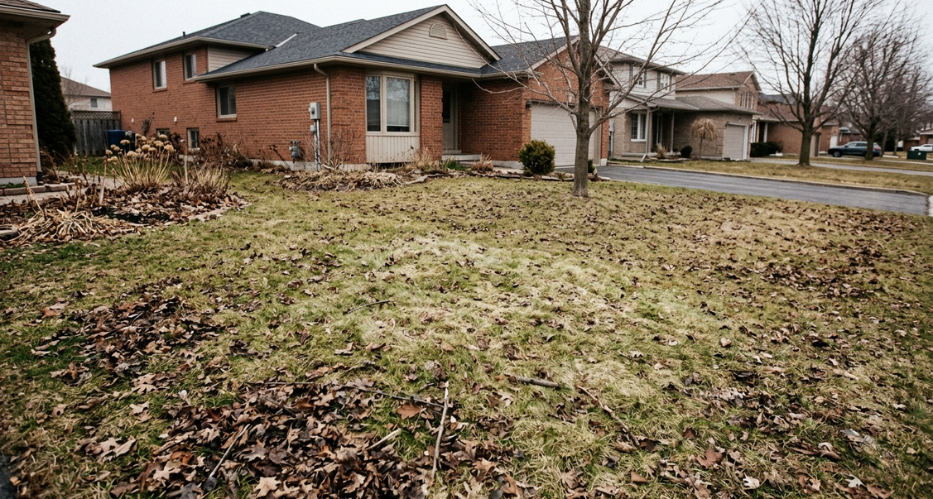
Winter leaves behind a mess (dead foliage, fallen branches, matted leaves, and soggy debris) that suffocates your soil and shelters pests.
But do not rush it.
Clearing too early disturbs beneficial insects still overwintering in that material. Wait until temperatures are consistently above 10°C, then work methodically from hardscape edges inward toward your garden beds.
Here is our Expert Ontario Spring Debris Cleanup Timing Guide
| Debris Type | When to Remove | Why It Matters |
|---|---|---|
| Fallen branches and twigs | As soon as snow melts | Clears access and prevents mold buildup |
| Matted leaves over lawn | Once ground is no longer frozen | Prevents grass suffocation and snow mold |
| Dead perennial foliage | When temps hit 10°C consistently | Protects overwintering beneficial insects |
| Soggy annual stems | Early to mid April (Southern Ontario) | Reveals emerging shoots without disturbing them |
Task 2: Prune Trees and Shrubs
Pruning at the wrong time in Ontario can cost you an entire season of blooms or leave plants vulnerable to a late frost.
The golden rule is simple: prune dead, damaged, or diseased wood as soon as you can see it. For everything else, timing depends entirely on whether your shrub blooms in spring or summer.
What to know before you prune:
- Summer-blooming shrubs (prune early) — these bloom on new growth, so cutting in early spring encourages fuller flowering
- Spring bloomers (prune after flowering) — cutting forsythia or lilac before bloom removes this season’s buds entirely
- Fruit trees (prune before bud break) — late February to March is ideal for most Ontario fruit trees
Ontario Spring Pruning Timing Guide by Plant Type
| Plant Type | When to Prune | Notes |
|---|---|---|
| Fruit trees (apple, pear, cherry) | Late February – March | Prune before bud break for best shape and yield |
| Ornamental grasses | Early spring before new growth | Cut back to 3–4 inches from the ground |
| Panicle hydrangeas | Early spring | Bloom on new wood — early pruning encourages bigger blooms |
| Forsythia and lilac | After flowering (May – June) | Pruning early removes this season’s flower buds entirely |
| Roses (panicle/shrub) | When forsythia blooms in Ontario | A reliable natural timing signal for rose pruning |
| Dead/damaged branches | Anytime | Remove immediately regardless of season |
Task 3: Improve and Amend Soil for Spring Planting
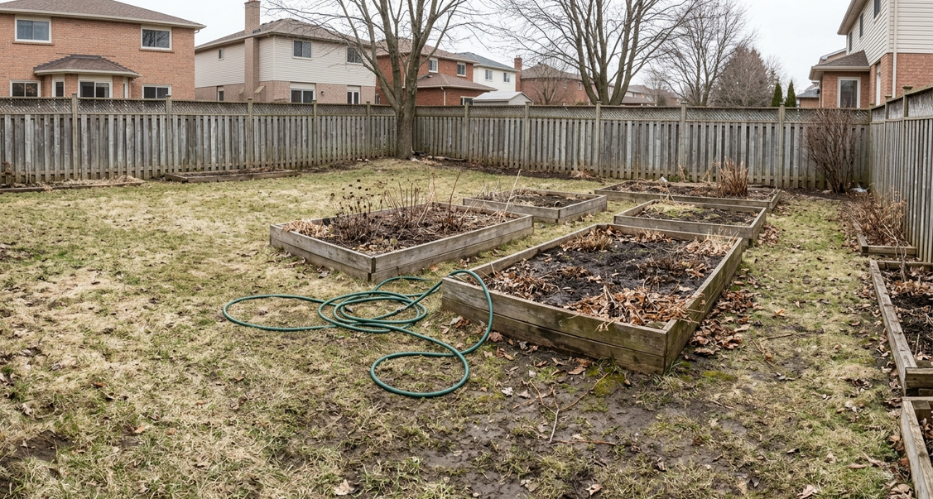
Ontario’s clay-heavy soil compacts hard over winter and needs help before anything goes in the ground.
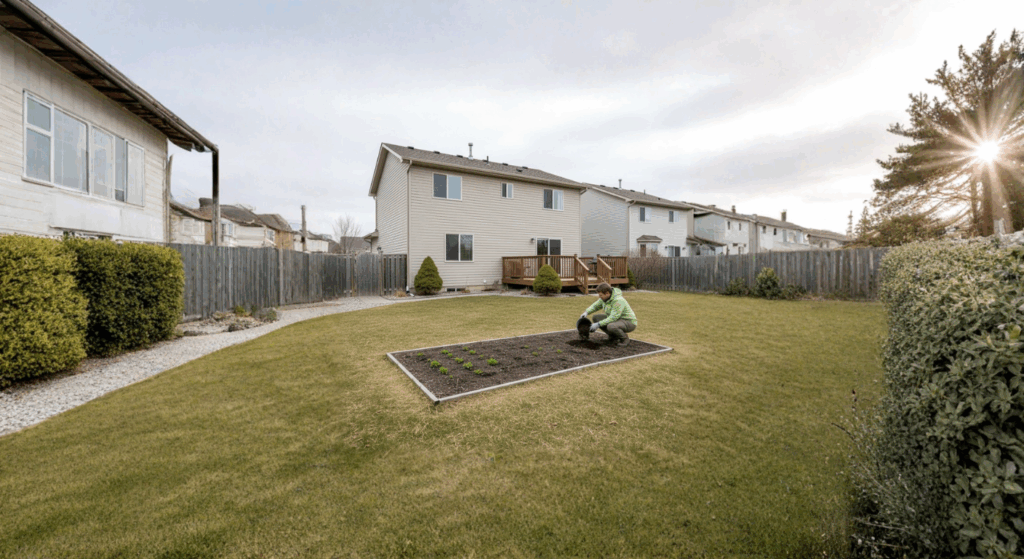
As soon as soil is workable, add a 1–2 inch layer of compost and work it in shallowly; this single step improves drainage, nutrients, and moisture retention all at once.
| Soil Amendment | Best For | How Much to Add |
|---|---|---|
| Compost | All Ontario garden beds | 1–2 inches worked in shallowly |
| Composted manure | Vegetable gardens | 2 inches mixed into top 6 inches |
| Peat moss | Sandy or nutrient-poor soil | 2–3 inches blended into existing soil |
| Horticultural grit or sand | Heavy clay beds | Mix in generously to improve drainage |
Task 4: Start Seeds Indoors for Spring Planting
Canada’s short growing season means starting indoors is non-negotiable for most Ontario gardeners.
Count back 6–8 weeks from your local last frost date.
For much of Southern Ontario that points to mid to late March as your ideal indoor seed starting window.
| Crop | Weeks Before Last Frost | Southern Ontario Start Date |
|---|---|---|
| Tomatoes | 6–8 weeks | Mid March – Early April |
| Peppers and eggplant | 8–10 weeks | Early – Mid March |
| Annual flowers (petunias, impatiens) | 6–8 weeks | Mid March – Early April |
| Cucumbers and squash | 3–4 weeks | Late April |
| Lettuce and kale | 4–6 weeks | Late March – Early April |
| Broccoli and cabbage | 6–8 weeks | Mid March – Early April |
Task 5: Get Ahead of Spring Weeds Before They Take Over
Early spring is your best and only window to win the weed battle.
Pull them young while the soil is still soft and moist; once they root deep and go to seed, you are fighting them all season long.
| Common Ontario Spring Weed | Best Removal Method | Urgency Level |
|---|---|---|
| Dandelion | Hand pull with deep root tool | High (seeds spread fast) |
| Creeping Charlie | Hand pull or smothering mulch | High (spreads aggressively underground) |
| Chickweed | Hand pull before flowering | Medium (easy to remove when young) |
| Thistle | Dig out full taproot carefully | High (regrows from any root left behind) |
| Crabgrass | Pre-emergent treatment in early spring | Medium (targets before germination) |
Task 6: Apply Mulch and Re-Edge Garden Beds
Once your soil has warmed up, mulch is your best friend for the rest of the season.
Apply it too early and you trap cold in the ground; wait for consistent daytime temperatures above 10°C, then lay 2–3 inches around plants and re-edge your beds for a clean, professional finish.
| Mulch Type | Best For | Key Benefit |
|---|---|---|
| Cedar bark mulch | Shrub and perennial beds | Natural pest-repelling properties |
| Wood chips | Pathways and tree bases | Long-lasting and widely available |
| Shredded leaves | Vegetable and flower beds | Free, soil-building, and nutrient-rich |
| Straw | Vegetable gardens | Excellent moisture retention |
| Black plastic mulch | Tomatoes and peppers | Warms soil faster in Ontario’s short season |
Top 5 Spring Gardening Questions Ontario Homeowners Ask About
1. When is it safe to start spring gardening tasks outdoors in Ontario?
Once soil hits 10°C and passes the “crumble test”; typically late March in Southern Ontario.
2. What should I plant first in my Ontario garden in spring?
Cool-season crops like lettuce, kale, and broccoli transplants go in first after the last frost passes.
3. How often should I mulch my Ontario garden beds?
Once annually every spring is sufficient; replenish only where the previous layer has fully broken down.
4. Do Ontario seniors qualify for discounted garden care services?
Yes, discounted home and garden care packages designed specifically for Ontario seniors are available through our home management plan.
5. How do I book a spring garden consultation in Ontario?
Book your free professional consultation online or call 1-833-410-4357; no commitment required.
Conclusion
A little effort in the right order goes a long way in an Ontario garden.
Need a hand?

Our professional garden care services and (senior-friendly) home management plan are one call away [1-833-410-4357] or book your free consultation online today.